

Wikimedia Commons / CC-BY-SA-3.0 / GFDL
Capital: Belgrade
Population: 6.5 million+
Language: Serbian – Cyrillic is the official script.

1 – Belgrade (also above)

Belgrade, the capital of Serbia, rises where the Sava flows into the Danube, and the city whose name means “White Fortress” grew from Celtic and Roman Singidunum into a prize so contested that it is often said to have been fought over in 115 wars and razed 44 times.
Stroll Knez Mihailova to the bohemian taverns of Skadarlija, see the Church of Saint Sava, one of the largest Orthodox churches in the world, with about 15,000 m² of mosaics inside, visit Tito’s grave in the House of Flowers and cross the Sava to old Habsburg Zemun.
On 6 April 1941 German bombers struck Belgrade, killing officially 2,271 people and burning the National Library, and from that August German-run Radio Belgrade played “Lili Marleen” almost every night, turning it into a hit with soldiers on both sides.
2 – Golubac

Golubac Fortress guards the entrance to the Iron Gates on the Danube, at about 100 km the longest gorge in Europe, and was first recorded in 1335 before Hungarian kings and Ottoman sultans fought over it for more than a century.
Climb through its nine or ten towers to the Hat Tower at the top, then explore Đerdap National Park, a UNESCO Global Geopark since 2020, with the Mesolithic village of Lepenski Vir downstream.
In 1428 the Polish knight Zawisza the Black was captured and killed at Golubac when the Ottomans broke a truce and attacked King Sigismund’s rear guard, and since the Iron Gate dam raised the river in 1964–72 one of the fortress towers has stood in the Danube.
3 – Novi Sad

Novi Sad, the capital of Serbia’s northern province of Vojvodina, faces Petrovaradin Fortress across the Danube, built by the Habsburgs between 1692 and 1780 and nicknamed the “Gibraltar of the Danube”.
Explore Petrovaradin’s 16 km of tunnels and its clock tower, whose hands are reversed so the big hand shows the hours to boatmen on the Danube, then cross the river to the old town of Novi Sad.
In January 1942 Hungarian troops and gendarmes killed more than 1,200 people in Novi Sad, mostly Jews and Serbs, shooting many on the Štrand beach and pushing them through holes in the Danube ice, and the crime is remembered by Jovan Soldatović’s memorial “The Family” on the quay.
4 – Kopaonik

Kopaonik, a mountain range in southern Serbia that crosses into Kosovo, rises to 2,017 m at Pančić’s Peak and was declared a national park in 1981.
Ski the slopes of Kopaonik, the largest resort in Serbia with about 55 km of runs, or hike its forest trails in summer through a park of around 120 km².
The botanist Josif Pančić, first president of the Serbian Royal Academy, asked to be buried on Kopaonik, and in 1951 his remains were moved to a granite mausoleum on the summit, which was renamed after him, damaged in the 1999 NATO bombing of the military installation there and later rebuilt.
5 – Kalemegdan Park

Kalemegdan Park wraps around Belgrade Fortress on the ridge above the meeting of the Sava and the Danube, where in July 1456 John Hunyadi and the friar John of Capistrano broke Mehmed II’s Ottoman siege, a victory that became linked with the noon bell rung in many churches.
Walk the ramparts to the Victor monument, see the Ružica church, whose chandeliers were made from WWI bullet casings, shell cases and sabres, and peer down the 35 m “Roman Well”, in fact an Austrian well completed in 1731.
The Victor, Ivan Meštrović’s nude bronze at Kalemegdan, was meant for a fountain in Terazije Square, but objections to its nudity saw it unveiled at the fortress in 1928, gazing across the rivers toward lands that were Austro-Hungarian until 1918.
6 – Nis

Niš, on the Nišava River in southern Serbia, was Roman Naissus, birthplace of Constantine the Great around 272–280, was held by the Ottomans for about 500 years from 1375 and served as Serbia’s wartime seat of government in 1914–15.
See Niš Fortress, built by the Ottomans in 1719–23 on Roman and medieval foundations, the mosaics of Constantine’s villa at Mediana and the Skull Tower, built after the Battle of Čegar in May 1809 with 952 skulls of Serbian rebels, 58 of which remain.
On 12 February 1942 prisoners at the Crveni Krst camp in Niš rushed their guards and 105 escaped, while 42 died on the wire, in what the city’s museum calls the first organised escape from a camp in occupied Europe, and more than 10,000 people were shot at nearby Bubanj Hill by 1944.
7 – Viminacium

Viminacium, near Kostolac on the Danube in eastern Serbia, was the capital of the Roman province of Upper Moesia and base of the Legio VII Claudia, a headquarters for Trajan’s Dacian Wars until Attila’s Huns destroyed it in 441.
Explore the excavated amphitheatre, the only one in Upper Moesia, and a mausoleum believed to be the tomb of Emperor Hostilian, who died of plague in 251, among well over 14,000 excavated graves.
Viminacium was dug systematically as the neighbouring Drmno open-cast coal mine and Kostolac power plant expanded, and in 2009 the mine uncovered Vika, a female southern mammoth up to about a million years old, displayed on site.
8 – Studenica Monastery
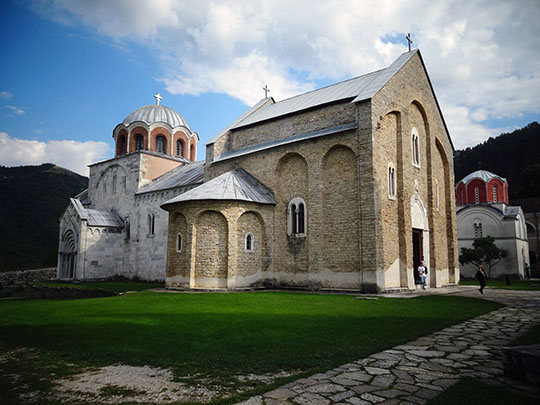
Studenica Monastery, in the Studenica valley south-west of Kraljevo, was founded in the late 12th century by Stefan Nemanja, founder of the medieval Serbian state, who gave up his throne in 1196 to become the monk Simeon, and UNESCO listed it in 1986.
See the white marble Church of the Virgin, model for the Raška style that blends Romanesque and Byzantine architecture, with its Crucifixion of 1209 painted on a blue background, then the King’s Church, founded by King Milutin in 1314.
Nemanja’s son Sava brought his father’s relics from Mount Athos to Studenica around 1207–08 and wrote its rule, the Studenica Typikon, and Nemanja, his wife Anastasia and his son Stefan the First-Crowned are all buried at Studenica.
9 – Gamzigrad-Romuliana
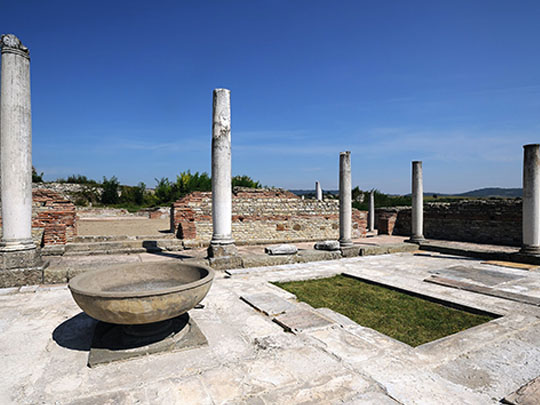

Gamzigrad-Romuliana, near Zaječar in eastern Serbia, is the fortified palace that Emperor Galerius built in his home region in the late 3rd and early 4th centuries and named Felix Romuliana after his mother, Romula, and UNESCO listed it in 2007.
Walk the palace walls and ruins, see the Dionysus and labyrinth mosaics in the National Museum in Zaječar, and climb Magura hill to the mausoleums and consecration mounds of Galerius and Romula, both deified after death.
The identity of Gamzigrad was confirmed only in 1984, when an archivolt inscribed FELIX ROMULIANA turned up, and Galerius, who pushed for the Great Persecution of Christians in 303, issued the Edict of Toleration from his deathbed in 311, two years before Constantine’s Edict of Milan.
10 – Stari Ras
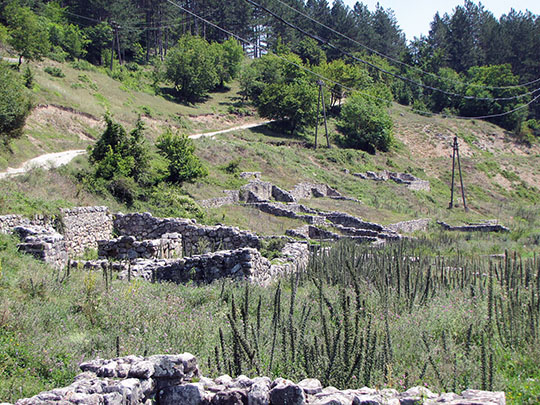
Stari Ras, near Novi Pazar in south-western Serbia, was the first capital of the medieval Serbian state under the Nemanjić dynasty from the 12th century, and UNESCO listed it with the nearby Sopoćani Monastery in 1979.
See the hilltop fortress of Gradina, the Church of Saints Peter and Paul, Serbia’s oldest surviving church, where Stefan Nemanja was baptised, and Đurđevi Stupovi, which he built in 1170–71 to thank St George for his release from imprisonment by his brothers.
In 1689 the Ottomans burned Sopoćani and stripped the lead from its roof, and although the monastery near Stari Ras lay deserted for more than 200 years and its vaults collapsed, its 13th-century frescoes, among them the Dormition, survived and are counted by UNESCO among the finest in Byzantine and Serbian medieval art.
11 – Kragujevac, Šumarice
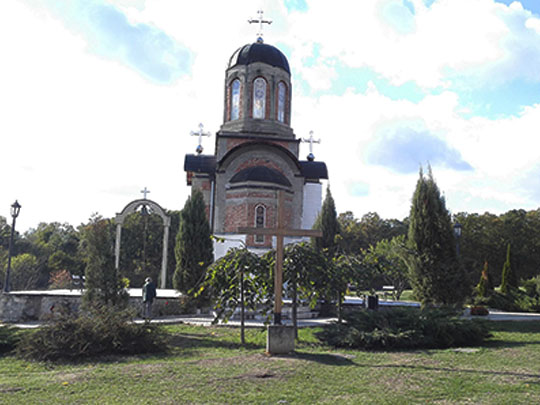
Kragujevac, in central Serbia, was made capital by Prince Miloš Obrenović in 1818 and kept the role until 1841, gaining Serbia’s first high school, theatre and newspaper, and the Sretenje Constitution of 1835, suspended after 55 days under pressure from the Ottoman Empire, Russia and Austria.
Explore the old cannon foundry, which cast its first cannon in 1853, then walk Šumarice Memorial Park, with around 30 mass graves, Miodrag Živković’s Interrupted Flight monument of 1963 and the Museum 21 October.
On 21 October 1941 German troops shot close to 2,800 people from Kragujevac and the surrounding villages in reprisal for an attack that had killed 10 German soldiers and wounded 26, applying the order of 100 hostages for every German killed and 50 for every wounded, and more than a hundred schoolboys and their teachers were among the dead.
12 – Sremski Karlovci

Sremski Karlovci, on the Danube just south-east of Novi Sad, hosted the congress that produced the Treaty of Karlowitz on 26 January 1699, when the Ottomans for the first time negotiated with a European coalition and admitted defeat, giving up most of Hungary, Transylvania and Croatia to Austria.
See the Cathedral of St Nicholas of 1758–62, the Patriarchal Court, the Four Lions Fountain of 1799 and the Karlovci Gymnasium, founded in 1791 as the oldest Serbian gymnasium, in the town that became the seat of the Serbian Orthodox Metropolitans.
Delegates at Karlowitz are said to have met in a room with four doors so no side had to enter first, around what is described as the first round table in diplomacy, and in May 1848 an assembly in Sremski Karlovci proclaimed Serbian Vojvodina from the town hall balcony.