

Wikimedia Commons / CC-BY-SA-3.0 / GFDL
Capital: Bratislava
Population: 5.4 million+
Language: Slovak

1 – Bratislava (also above)

Bratislava, the capital of Slovakia, sits on the Danube where Slovakia meets Austria and Hungary, and as Pressburg, or Pozsony, it served as the capital of Hungary from 1536 to 1783, after the Ottoman victory at Mohács.
See St Martin’s Cathedral, its spire topped by a gilded replica of the Hungarian crown, pass under Michael’s Gate, the only one of the city’s four medieval gates left standing, then visit the Primate’s Palace and Ödön Lechner’s Blue Church and look up to Bratislava Castle, gutted by fire in 1811.
Eleven reigning monarchs, Maria Theresa among them, and eight royal consorts were crowned in Bratislava’s St Martin’s Cathedral between 1563 and 1830, and in 1942 the wartime Slovak State, a client of Nazi Germany, paid Germany 500 Reichsmarks for every Jew it deported.
2 – Tatra Mountains

The Tatra Mountains, the highest range of the Carpathians, straddle the border with Poland and peak at Gerlachovský štít, about 2,655 m and the highest point in Slovakia, and the Slovak side became the country’s first national park, TANAP, in 1949.
Hike to the glacial lake of Štrbské Pleso, ride the cable car up Lomnický štít, the second-highest peak of the High Tatras, which has carried visitors to the summit since 1940, or explore the quieter Western Tatras.
Slovakia’s national anthem, “Nad Tatrou sa blýska” (“Lightning over the Tatras”), was written by Janko Matúška in 1844 in protest at the dismissal of his teacher Ľudovít Štúr, and on 19 November 2004 a windstorm flattened about 12,000 ha of Tatra forest.
3 – Banská Bystrica
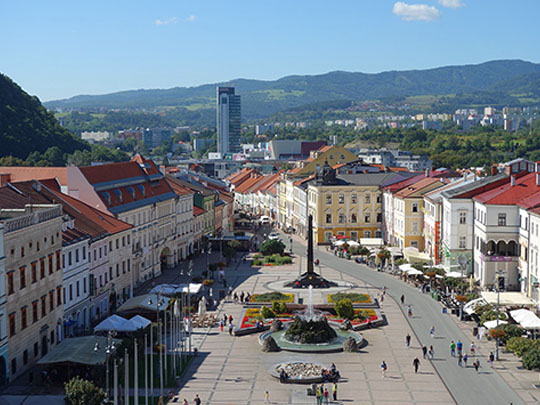
Banská Bystrica, on the Hron river in central Slovakia, grew rich as the medieval mining town of Neusohl, whose silver and copper supplied much of Europe, and from the mid-1490s the Thurzó–Fugger company traded its copper across the continent.
See SNP Square and its leaning Clock Tower, the surviving bastions and barbican of the town castle, the Church of Our Lady with its St Barbara altar of 1509 from the workshop of Master Paul of Levoča, and Dušan Kuzma’s split-shell SNP Museum of 1969.
The Slovak National Uprising broke out on 29 August 1944 with Banská Bystrica as its capital, and the town held until German forces took it on 27 October, after which about 900 people were killed and burned in the lime kiln at nearby Nemecká in January 1945.
4 – Demanovska Dolina

Demänovská Dolina, a valley in the Low Tatras near Liptovský Mikuláš, runs through limestone hollowed by more than 40 km of passages, the longest cave system in Slovakia and in the Carpathians.
Tour the Demänovská Cave of Liberty and the Demänovská Ice Cave, first mentioned in 1299, then ski or ride the lifts at Jasná, the largest ski resort in Slovakia, up the slopes of Chopok, at 2,024 m.
The Moravian teacher Alois Král found the Cave of Liberty in Demänovská Dolina in August 1921 and first named it the “Temple of Liberty”, and the Ice Cave had already been showing visitors its frozen halls since the 1880s.
5 – Pribylina

Pribylina, a village in the Liptov region at the foot of Kriváň in the High Tatras, was first recorded in the late 13th century and became home to an open-air museum after the Liptovská Mara dam flooded the valley below.
See the Museum of the Liptov Village in Pribylina, opened in 1991, where buildings from communities flooded by the Liptovská Mara reservoir were rebuilt, among them the early-Gothic Church of the Virgin Mary from Liptovská Mara and a Gothic-Renaissance manor house from Parížovce with late-Gothic wall paintings.
Kriváň, the peak that rises above Pribylina, appears on the Slovak 1, 2 and 5 cent euro coins.
6 – Spis Castle

Spiš Castle, on a hill above Spišské Podhradie in eastern Slovakia, was begun in the 12th century, held out against the Mongols in 1241 and covers about 4 ha, making it one of the largest castle complexes in Central Europe.
Explore the ruins, rebuilt by the Zápolya and Thurzó families and owned by the Csákys from the 1630s, then visit the other parts of the UNESCO site around Spiš Castle, listed in 1993 and extended in 2009: Spišská Kapitula, the church at Žehra and the old town of Levoča.
Spiš Castle burned in 1780, from causes that remain unknown, and its ruins later stood in for medieval fortresses in Dragonheart (1996) and The Last Legion (2007).
7 – Stratena

Stratená, an old mining and ironworking village on the Hnilec river whose last furnace closed in 1927, sits at the mouth of the Stratená Gorge, the narrowest part of a 14 km valley on the edge of the Slovak Paradise.
Walk the valley to the lake of Stratenská píla, an arm of the Palcmanská Maša reservoir, and visit the Dobšinská Ice Cave, discovered in 1870 and part of the UNESCO-listed Caves of Aggtelek Karst and Slovak Karst since 2000.
The Dobšinská Ice Cave near Stratená holds about 110,000 m³ of ice up to 26.5 m thick, and in 1887 it became one of the first electrically lit caves in Europe.
8 – Kalvaria Banska Stiavnica

The Calvary of Banská Štiavnica crowns Scharffenberg, an old volcanic plug above the silver-mining town, and was built in 1744–51 by the Jesuit František Perger within what became the UNESCO site of the historic town and its technical monuments, listed in 1993.
Climb past around 20 chapels to the three churches, Lower, Holy Stairs and Upper, then explore the old town of Banská Štiavnica and its tajchy, dozens of artificial reservoirs built to power the mines.
Left to decay under Communism and looted from the 1950s, the Calvary was placed on the World Monuments Watch in 2008 and restored, and in 1762 Maria Theresa founded Banská Štiavnica’s Mining Academy, one of the world’s earliest technical colleges.
9 – Levoča
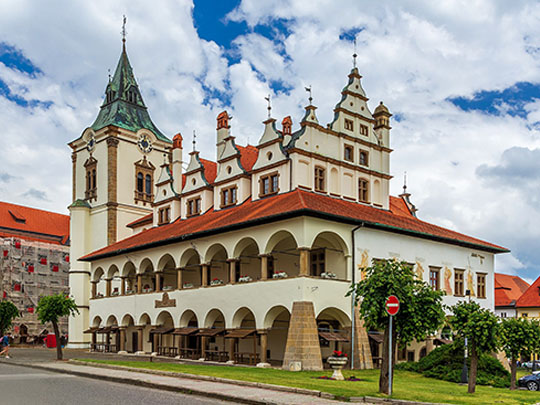
Levoča, an old royal trading town in the Spiš region of eastern Slovakia, kept its walled medieval centre and joined the UNESCO site of Spiš Castle and its associated monuments in 2009.
See the Gothic Basilica of St James and its Master Paul altar of c. 1508–17, at 18.62 m reputedly the tallest Gothic wooden altar in the world, the Town Hall and the iron Cage of Shame, then climb Marian Hill, where John Paul II said Mass for about 650,000 people in 1995.
The “White Lady of Levoča”, Julianna Géczy, carried messages between the Habsburg commander and the town’s defenders before Levoča surrendered in 1710, legend says she stole the key to the town gate, and she was beheaded in Győr in 1714 and later cast as a traitor in Mór Jókai’s novel.
10 – Dukla Pass
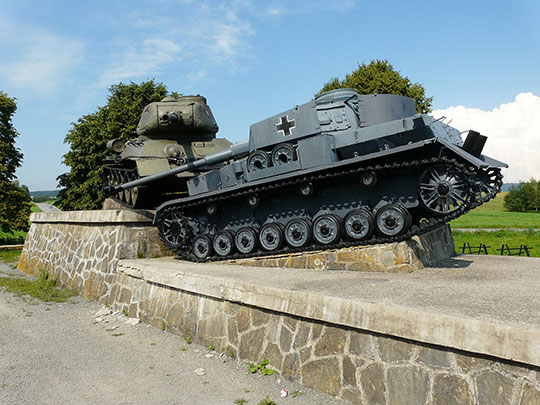
The Dukla Pass, a low Carpathian crossing on the Slovak–Polish border north of Svidník, was the target of the Soviet 38th Army and the 1st Czechoslovak Army Corps from 8 September 1944, in an offensive meant to break through to the Slovak National Uprising.
Visit the memorial and cemetery at Vyšný Komárnik, built in 1949 with a 28 m monument and the names of 1,265 Czechoslovak fallen, the T-34 tanks in “Death Valley” near Kapišová, and the open-air military museum at Svidník.
Czechoslovak soldiers crossed back into their homeland at the Dukla Pass on 6 October 1944, but the planned five-day push to Prešov became a seven-week battle with tens of thousands of casualties on both sides, and the insurgents were never relieved.
11 – Orava Castle
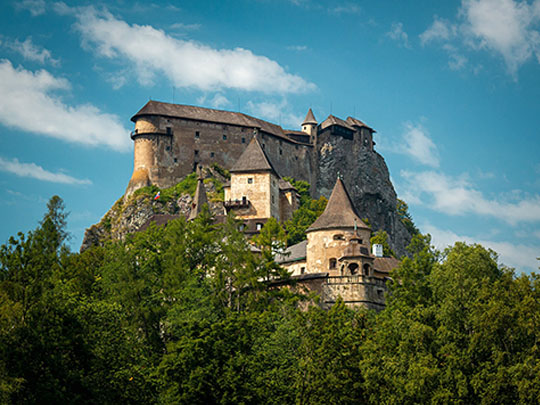

Orava Castle stands on a cliff about 112 m above the Orava river at Oravský Podzámok in northern Slovakia, built after the Mongol invasion of 1241 and first recorded in 1267, and the Thurzó family gave it most of its present form from 1556.
Climb through the castle, rebuilt after a fire destroyed all its wooden parts in 1800, and see its museum, opened in 1868 and one of the oldest in Slovakia.
Orava Castle played Count Orlok’s castle in F. W. Murnau’s Nosferatu (1922), and it returned as Castle Dracula in the BBC and Netflix series Dracula (2020).
12 – Bardejov
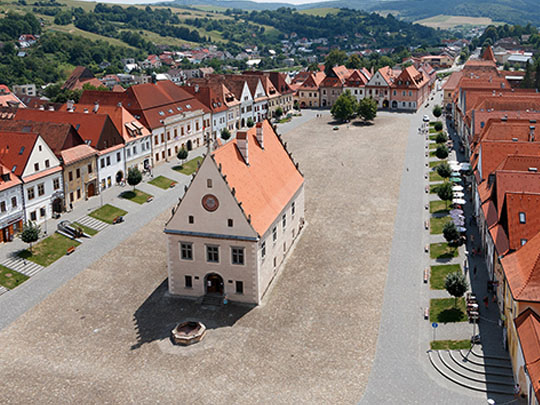

Bardejov, in north-eastern Slovakia near the Polish border, is a small fortified medieval town on an old trade route across the Carpathians between Hungary and Poland, listed by UNESCO in 2000, with more than half its walls intact.
See Town Hall Square, lined with 15th-century burghers’ houses, the Basilica of St Giles and its 11 late-Gothic winged altars, the Town Hall begun in 1505 and the 18th-century Jewish suburb, then visit the spa at Bardejovské Kúpele, where Empress Elisabeth, “Sisi”, stayed in 1895.
In 1942 most of the Jews of Bardejov and the surrounding district were deported, including 2,401 people sent to ghettos in the Lublin region in May, and when Soviet troops arrived in January 1945 seven Jews came out of cellars under the main square.
13 – Vlkolínec
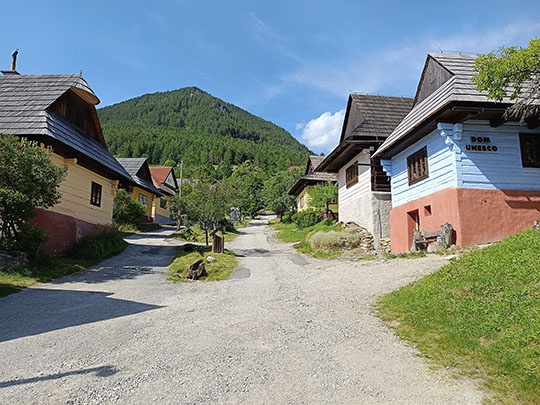
Vlkolínec, in the Veľká Fatra mountains about 7 km from Ružomberok, is a village of about 45 log houses, listed by UNESCO in 1993 as a remarkably complete traditional settlement of the Central European mountains.
Walk past the log houses to the two-storey wooden belfry of 1770, which rang for prayers and deaths and divided the village into an Upper End and a Lower End, and the church of the Visitation of 1875.
Vlkolínec takes its name from vlk, Slovak for “wolf”, after the wolves common in the forests around it, and it was historically one of the outlying “streets” of Ružomberok, first recorded in 1461.
14 – Trenčín
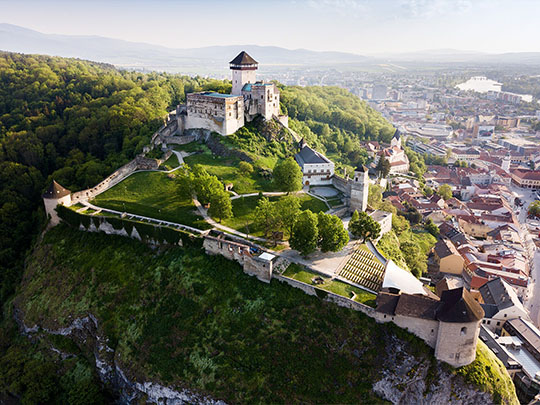

Trenčín, on the Váh in western Slovakia, grew beneath a castle rock where in 179 AD Roman soldiers carved an inscription naming the place Laugaricio, long considered the northernmost evidence of Roman troops in Central Europe.
Climb to Trenčín Castle, seat from 1302 to 1321 of Matthew Csák, the “Lord of the Váh and the Tatras”, who at his peak controlled about 50 castles, and see the Matthew Tower named after him.
The Trenčín inscription records 855 soldiers of Legio II Adiutrix wintering here during the Marcomannic Wars against the Quadi, and legend says the castle’s 80 m Well of Love was dug by the Turkish nobleman Omar to free his beloved Fatima.
15 – Devín Castle
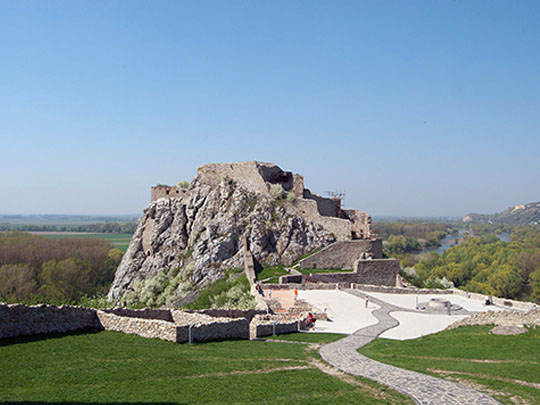

Devín Castle crowns a rock where the Morava meets the Danube on the western edge of Bratislava, a site probably recorded as “Dowina” in 864, when Louis the German besieged Prince Rastislav of Great Moravia there.
Explore the ruins, blown up by Napoleon’s troops in 1809, and the Maiden Tower on its own rock, then find the Gate of Freedom below, which names more than 400 people killed trying to escape to the West between 1945 and 1989.
On 24 April 1836 Ľudovít Štúr led students up to Devín Castle, where each took a Slavic name and they called the city “Bratislava” for the first time, and before 1989 the castle sat inside a guarded Iron Curtain border zone.
16 – Košice
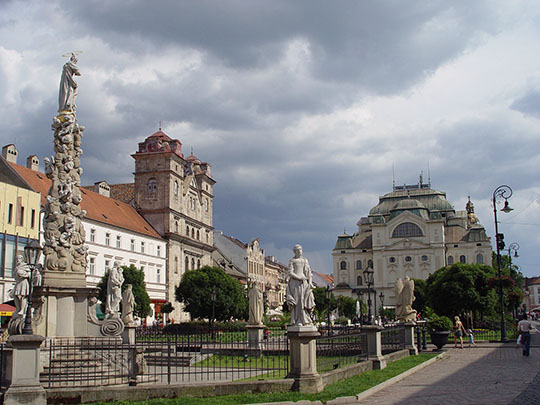
Košice, on the Hornád river in eastern Slovakia, is the country’s second-largest city, first recorded in 1230, and in 1369 King Louis I of Hungary granted it a coat of arms by royal charter, which the city claims as the first of its kind in Europe.
See St Elisabeth Cathedral, begun around 1380 and the largest church in Slovakia, where Francis II Rákóczi was reburied in 1906, then Urban’s Tower, St Michael’s Chapel, the State Theatre of 1899 and the remains of the Lower Gate beneath Hlavná ulica.
On 26 June 1941 unidentified aircraft bombed Košice, then the Hungarian city of Kassa, and Hungary declared war on the Soviet Union the next day, and in May and June 1944 more than 10,000 of the city’s Jews were deported to Auschwitz.