

Wikimedia Commons / CC-BY-SA-3.0 / GFDL
Capital: Ljubljana
Population: 2.1 million+
Language: Slovene, with Italian and Hungarian

1 – Piran (also above)

Piran, a walled town on a narrow peninsula on Slovenia’s short Adriatic coast, grew rich on salt and trade under Venice from 1283 to 1797, passed to Italy after WWI and went to Yugoslavia in 1954, after which much of its Italian-speaking population emigrated.
See Tartini Square, the old inner harbour filled in 1894, St George’s Church with its bell tower modelled on St Mark’s in Venice, and the Sečovlje salt pans, where salt is made with methods about 700 years old.
The violinist Giuseppe Tartini was born in Piran in 1692, and legend says he wrote his “Devil’s Trill” sonata after dreaming that the Devil played his violin, and Antonio Dal Zotto’s bronze statue of him has stood on the square since 1896.
2 – Lake Bled


Lake Bled lies in the Julian Alps of north-west Slovenia below Bled Castle, first recorded in 1011 and among the oldest castles in Slovenia, and the Swiss doctor Arnold Rikli turned it into a health resort in the mid-19th century.
Ride a pletna, the traditional boat whose rowing rights go back to a privilege granted under Maria Theresa, out to Bled Island and its church, then climb to the castle and try the kremšnita, the cream cake created at Hotel Park in 1953.
Legend says the bell given to the church on Bled Island by a widow sank in a storm until the Pope sent a new one, and in WWII Bled was the administrative centre of German-occupied Upper Carniola, while after the war Tito entertained foreign statesmen at Vila Bled, built in 1947.
3 – Soča Valley

The Soča Valley follows the emerald Soča river through the Julian Alps of western Slovenia, and in 1915–17 it was the Isonzo Front, where Italy and Austria-Hungary fought 12 battles along the river.
Visit the Kobarid Museum, winner of the Council of Europe Museum Prize in 1993, the Italian Charnel House, opened by Mussolini in 1938 and holding the remains of 7,014 Italian soldiers, and the Church of the Holy Spirit at Javorca, built by Austro-Hungarian soldiers in 1916.
The Battle of Caporetto, which began at Kobarid in the Soča Valley on 24 October 1917, drove the Italians back about 150 km to the Piave, and Hemingway, who reached Italy only in 1918, described the retreat in A Farewell to Arms.
4 – Ljubljana

Ljubljana, the capital of Slovenia, grew from the Roman colony of Emona beneath a castle first recorded in the 12th century, and between the world wars the architect Jože Plečnik reshaped the city in works UNESCO listed in 2021.
Cross Plečnik’s Triple Bridge, whose two side footbridges he added in 1929–32, see the Dragon Bridge of 1901, one of Europe’s earliest reinforced-concrete bridges, and Prešeren Square with its statue of the national poet, then ride the funicular up to Ljubljana Castle.
Italy annexed Ljubljana in 1941 and in 1942 ringed it with some 30 km of barbed wire, whose route is the Path of Remembrance and Comradeship, and in October 1904 James Joyce and Nora Barnacle spent a night at the station after getting off the train by mistake, thinking they had reached Trieste.
5 – Predjama Castle

Predjama Castle sits in the mouth of a cave halfway up a 123 m cliff about 10 km from Postojna, was first recorded in 1274 and is listed by Guinness World Records as the largest cave castle in the world.
Tour the Renaissance castle built in 1570 by Baron Philipp von Cobenzl, which replaced one destroyed after the siege and another brought down by an earthquake in 1511, then explore the four-level cave behind it, with the Lokva river running through the lowest level.
In 1483 the robber knight Erazem Lueger fled to Predjama Castle after killing a marshal at the imperial court and held out for over a year against Frederick III’s forces, supplied through a secret passage, until a cannon shot killed him, legend adds while he was on the toilet.
6 – Kostanjevica Monastery, Nova Gorica

Kostanjevica Monastery stands on a hill above Nova Gorica, was founded in 1623 and has been run by Franciscans since 1811, and when the border was drawn in 1947 it ended up a few hundred metres inside Yugoslavia, in what became the new town of Nova Gorica.
See the Bourbon crypt known as “Little St Denis”, the Škrabec library of about 10,000 books and 30 incunabula, and the church, restored in 1924–29 after heavy damage in the Isonzo battles of WWI.
Charles X, the last Bourbon king of France, died of cholera in Gorizia in 1836 and was buried at Kostanjevica, later joined by his son Louis, duc d’Angoulême, his daughter-in-law Marie-Thérèse, daughter of Louis XVI and Marie Antoinette, and Henri, comte de Chambord.
7 – Škocjan Caves

The Škocjan Caves, on the Kras plateau of south-west Slovenia that gave the word “karst” its name, are where the Reka river vanishes underground into a canyon more than 200 m deep, and UNESCO listed them in 1986.
Follow the walkway into Martel’s Chamber, about 146 m high and one of the largest underground chambers known, and cross Cerkvenik Bridge high above the roaring Reka.
People have lived around the Škocjan Caves for thousands of years, leaving more than 600 Late Bronze Age metal objects as probable offerings in Mušja Cave, and the Greek writer Posidonius described the caves in antiquity.
8 – Postojna Cave
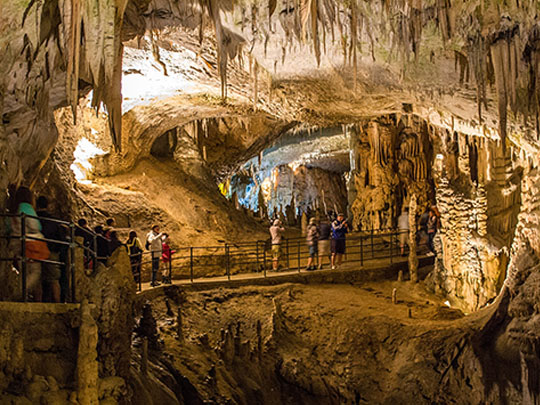
Postojna Cave, in the karst of south-west Slovenia, runs for about 24 km and opened to visitors in 1819, a year after the local lamplighter Luka Čeč found new passages, and in 1884 it became one of the first caves in the world with electric light.
Ride the cave railway, first laid in 1872, past the white “Brilliant” stalagmite to the Concert Hall, which holds about 10,000 people, and meet the olm, a blind salamander that can live for a century and was once taken for a baby dragon.
On 23 April 1944 partisans of the Vojko Brigade slipped into Postojna Cave through an unmapped passage and set fire to the German fuel store inside, which burned for about a week and left the walls near the entrance blackened with soot.
9 – Triglav National Park
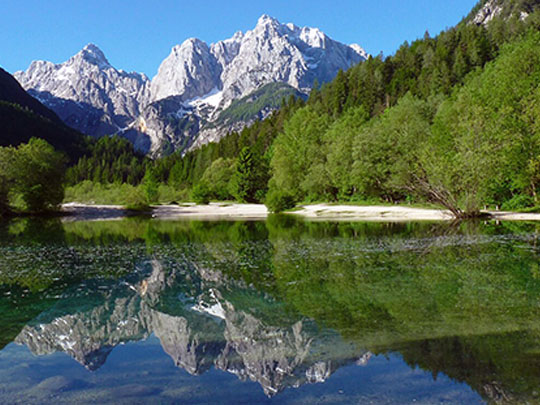
Triglav National Park, Slovenia’s only national park, covers about 880 km² of the Julian Alps around Mount Triglav, at 2,864 m the country’s highest peak, and grew from a 1924 lease protecting the Triglav Lakes Valley into its modern form in 1981.
Hike the Triglav Lakes Valley, or climb Triglav itself, first conquered on 26 August 1778 by four men from Bohinj, to the Aljaž Tower on the summit.
The priest Jakob Aljaž bought the summit of Triglav for 1 gulden in 1895 and put up the metal tower that bears his name, and the mountain’s three peaks appear on the Slovenian flag and coat of arms.
10 – Ptuj
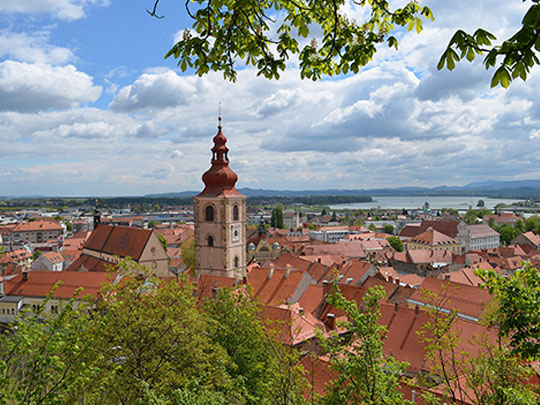
Ptuj, on the Drava in north-east Slovenia, is the oldest recorded town in the country, the Roman Poetovio, where in AD 69, as Tacitus records, Vespasian’s generals met at the winter quarters of the Thirteenth Legion and resolved to march on Italy for him.
See Ptuj Castle and its collection of Kurent masks, the Orpheus Monument, a Roman tombstone almost 5 m high, the remains of the town’s temples of Mithras and the wine cellar begun by Minorite friars in 1239 and called the oldest in Slovenia.
In the days before Lent, Kurents in sheepskins, bell belts and long-tongued masks go from house to house around Ptuj to chase away evil, rounds UNESCO added to its intangible heritage list in 2017, and the Kurentovanje carnival has grown around them since 1960.
11 – Idrija
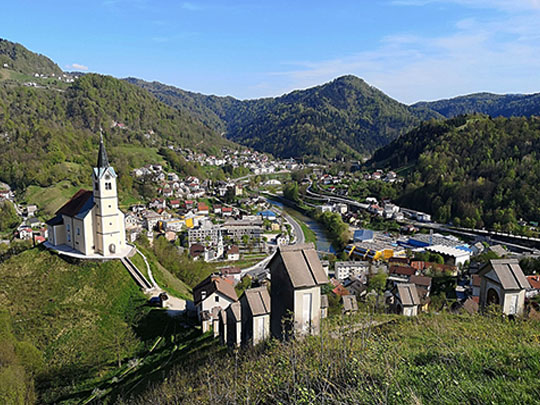
Idrija, in the hills of western Slovenia, grew around mercury found in 1490, according to tradition by a tub-maker whose bucket filled with the heavy liquid, and for about 500 years it worked the world’s second-largest mercury mine, listed by UNESCO with Almadén in Spain in 2012.
Walk into Anthony’s Shaft, dug around 1500 and one of the oldest preserved mine entrances in Europe, see the museum in Gewerkenegg Castle and the Kamšt, a 13.6 m wooden wheel of 1790 that pumped water from the mine, then follow the klavže, the stone timber dams nicknamed the “Slovenian pyramids”.
The Idrija mine stopped working in 1995, and in 1944–45 the partisan printing shop at nearby Vojsko, never found by the Germans, produced Partizanski dnevnik, described as the only daily newspaper printed by a resistance movement in occupied Europe.
12 – Lake Bohinj
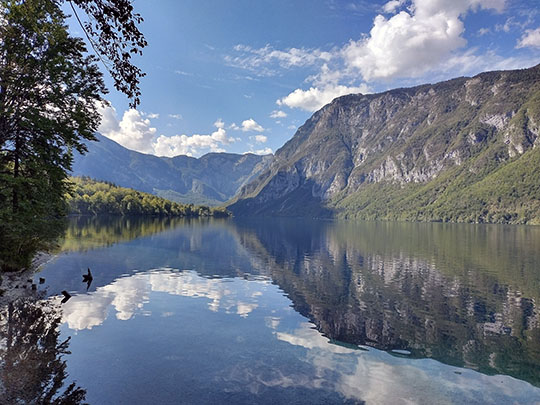
Lake Bohinj, the largest permanent natural lake in Slovenia at 318 ha, is a glacial lake about 4 km long and up to 45 m deep inside Triglav National Park, west of Bled.
See the medieval Church of St John the Baptist by the stone bridge at the eastern end of the lake, then walk up to the 78 m Savica waterfall, which feeds Lake Bohinj from the Triglav Lakes Valley.
France Prešeren set his epic The Baptism on the Savica, published in 1836, at the falls above Lake Bohinj, and the Bohinj Railway, opened in 1906 through a tunnel of about 6.3 km, carried most of Austria’s supplies to the Isonzo Front in WWI.
13 – Maribor
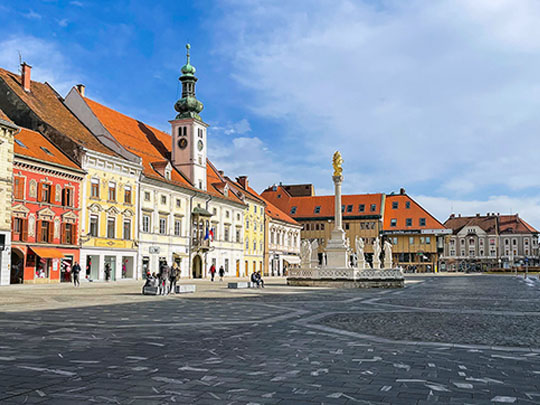
Maribor, Slovenia’s second city, on the Drava, grew around a castle first recorded in 1164, and on 1 November 1918 Rudolf Maister took military control of the German-majority city for the Slovenes.
See the Old Vine in the riverside Lent district, the medieval synagogue, one of the oldest surviving in Europe, the Judgement Tower, Maribor Castle and the Plague Column of 1743.
The Old Vine in Maribor, a Žametovka more than 400 years old, is listed by Guinness as the oldest fruit-bearing vine in the world, and in WWII Hitler visited the annexed city in April 1941, before 29 Allied raids destroyed about 47% of it.