

Wikimedia Commons / CC-BY-SA-3.0 / GFDL
Capital: Madrid
Population: 49 million+
Language: Spanish

1 – Granada (also above)

Granada, below the Sierra Nevada in Andalusia, was the last Muslim kingdom in Spain until Boabdil surrendered it to Ferdinand and Isabella on 2 January 1492, and UNESCO listed the Alhambra and the Generalife in 1984 and added the Albaicín in 1994.
Tour the Nasrid palaces of the Alhambra and the Generalife gardens, see the Renaissance palace Charles V began in 1527, visit the Royal Chapel with the tombs of Ferdinand and Isabella, and climb through the Albaicín to the cave houses of Sacromonte.
In 1492 the Catholic Monarchs’ Alhambra Decree expelled Spain’s unconverted Jews and their Capitulations of Santa Fe, agreed outside Granada, sent Columbus west, and in August 1936 the Granada-born poet Federico García Lorca was shot by Nationalist forces between Víznar and Alfacar, his remains never found.
2 – Barcelona

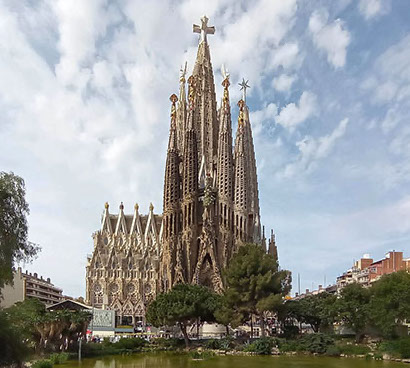

Barcelona, capital of Catalonia, grew from Roman Barcino, founded under Augustus, into a Mediterranean port that staged world expos in 1888 and 1929, and UNESCO lists its Gaudí buildings, among them the Sagrada Família’s Nativity façade and crypt, along with Domènech i Montaner’s Palau de la Música Catalana and Hospital de Sant Pau.
Wander the Barri Gòtic, stroll La Rambla past Miró’s pavement mosaic, see Park Güell, Mount Tibidabo, Casa Batlló and Casa Milà, and stand among the tree-like columns of the Sagrada Família, begun in 1882, taken over by Gaudí in 1883 and consecrated as a basilica by Benedict XVI in 2010.
Gaudí was hit by a tram in 1926 and mistaken for a beggar, dying with less than a quarter of the Sagrada Família built, and in March 1938 Italian bombers flying from Mallorca struck Barcelona in 18 raids over three days, killing around 1,000 people.
3 – Bilbao

Bilbao, the largest city of the Basque Country, was chartered in 1300 on the Nervión estuary and grew rich on iron and shipbuilding, and the Vizcaya Bridge downriver, opened in 1893 and listed by UNESCO in 2006, was the world’s first transporter bridge.
See Frank Gehry’s titanium-clad Guggenheim Museum, opened in October 1997, with Jeff Koons’s flower-covered Puppy and Louise Bourgeois’s giant spider Maman outside, then wander the Siete Calles of the old town.
On 26 April 1937 German and Italian aircraft bombed Guernica, about 30 km east of Bilbao, killing an estimated 170–300 people, and that May nearly 4,000 Basque children sailed from Bilbao to Britain aboard the Habana, weeks before the city fell on 19 June.
4 – Burgos

Burgos, founded in 884 on the plains of Castile and later a capital of the kingdom, is crowned by a Gothic cathedral begun in 1221 and listed by UNESCO in 1984, where El Cid and his wife Jimena have lain since 1921.
See Burgos Cathedral, the royal convent of Las Huelgas, founded in 1187, and the Museum of Human Evolution, then visit the UNESCO-listed caves of Atapuerca nearby, where human fossils date back nearly a million years.
After the military rising of July 1936 Burgos became the seat of the Nationalist government, and it was here, on 1 October 1936, that Franco took office as Generalísimo and head of the government of the State.
5 – Córdoba

Córdoba, on the Guadalquivir in Andalusia, became the seat of a caliphate in 929 under Abd al-Rahman III and, as Britannica puts it, probably the most cultured city in Europe, and UNESCO listed its Mosque in 1984 and the historic centre around it in 1994.
See the Mosque-Cathedral, begun around 785, with its forest of around 850 columns and the Renaissance cathedral built inside it from 1523, cross the Roman bridge, and visit Medina Azahara, the ruined palace city founded in 936 and listed by UNESCO in 2018.
Seneca, Averroes and Maimonides were all born in Córdoba, Charles V is said to have told the builders of the cathedral inside the mosque that they had destroyed “something unique”, and the Roman bridge played the Long Bridge of Volantis in Game of Thrones.
6 – Nerja, Costa del Sol

Nerja, a white town on the Costa del Sol east of Málaga, looks out to sea from the Balcón de Europa, a clifftop promenade whose name is popularly credited to Alfonso XII, who visited in January 1885 after the Andalusian earthquake of Christmas 1884.
Walk the Balcón de Europa and the coves below it, then visit the Caves of Nerja, found in January 1959 by five friends from nearby Maro, opened in 1960 and home to a 32 m column that has held a Guinness record since 1989.
Seal paintings in the Caves of Nerja were hailed in 2012 as possible Neanderthal art, but the same team concluded in 2020 that they were probably made by modern humans, and the town became famous across Spain as the setting of the TV series Verano Azul (1981–82).
7 – Girona

Girona, in north-east Catalonia, grew from the Roman town of Gerunda within walls that ring the old Força Vella, and its medieval Jewish quarter, home to the scholar Nahmanides, is one of the best preserved in Europe.
See Girona Cathedral, whose Gothic nave, about 23 m wide, is the widest in the world, the colourful houses along the Onyar, the “Arab” Baths of 1194, which are in fact Romanesque, and the lioness statue whose bottom, legend says, you must kiss to return.
In 1809 Girona held out for about seven months against a French siege in which some 4,000 civilians died, defended in part by the Ultonia Regiment, raised from Irish exiles in 1709, and the cathedral steps later played the Great Sept of Baelor in Game of Thrones.
8 – Huesca

Huesca, at the foot of the Pyrenees in Aragon, was the Roman town of Osca and, after Peter I took it from its Muslim rulers in 1096, the capital of the kingdom of Aragon until 1118.
See the Gothic cathedral, built on the site of a mosque, and the Romanesque church of San Pedro el Viejo, burial place of Kings Ramiro II and Alfonso I, then drive out to Loarre Castle, an 11th-century fortress that appeared in Kingdom of Heaven (2005).
Republican militias besieged Huesca from 1936 without taking it, and on 20 May 1937 George Orwell was shot through the throat by a sniper on the front nearby, while the generals’ promise that “tomorrow we’ll have coffee in Huesca” became a running joke in the trenches.
9 – Jerez

Jerez de la Frontera, in the sherry triangle of western Andalusia, takes “Frontera” from its centuries on the Christian–Muslim frontier before Castile took it in the 1260s, and “sherry” is the English rendering of its name.
Tour the sherry bodegas, watch the horses “dance” at the Royal Andalusian School of Equestrian Art, see the Almohad Alcázar and catch flamenco in the city where Lola Flores was born.
William Garvey, an Irishman from the south-east who came to Spain to buy merino sheep, founded one of the great sherry houses of Jerez in 1780, and his son Patrick built the Bodega San Patricio, while Shakespeare’s Falstaff sings the praises of “sherris sack” in Henry IV, Part 2.
10 – Madrid

Madrid, at the heart of the Iberian plateau, became the seat of Philip II’s court in 1561, and the Paseo del Prado and Buen Retiro, home to the Prado, were listed by UNESCO in 2021.
See the Prado, opened in 1819, Picasso’s Guernica at the Reina Sofía, the Royal Palace built after the old Alcázar burned in 1734, the Plaza Mayor and the Metrópolis Building of 1911 on Gran Vía, then eat at Botín, founded in 1725 and recognised by Guinness as the oldest restaurant in the world.
Madrid held out against Franco’s forces from November 1936 until March 1939, and at Jarama, south-east of the city, Irish volunteers fought on both sides in February 1937, the poet Charles Donnelly dying with the International Brigades while Eoin O’Duffy’s Irish Brigade served the Nationalists.
11 – Palma
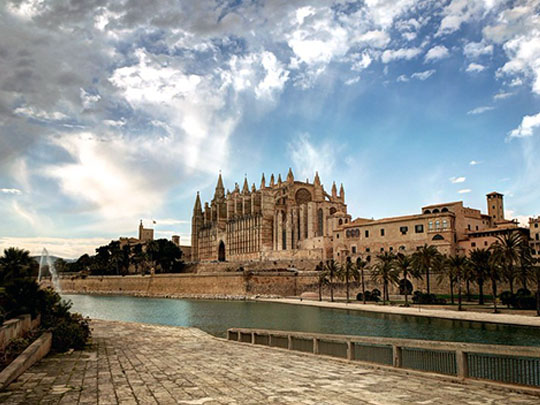
Palma, capital of Mallorca, was conquered by Rome in 123 BC, flourished as the Moorish city of Madina Mayurqa and fell to James I of Aragon on 31 December 1229, later becoming capital of the Kingdom of Majorca.
See La Seu, the cathedral built from 1229 to 1601, with a nave about 44 m high and a rose window around 13 m across, reworked inside by Gaudí in 1903–14 and by Miquel Barceló in 2007, then the Almudaina Palace, La Llotja and the circular Gothic Bellver Castle.
On 2 February and 11 November the morning sun through the rose window of Palma Cathedral throws a figure of eight of light onto the wall below the opposite window, and in July 1817 General Luis de Lacy, grandson of a Limerick-born Wild Geese officer, was executed by firing squad at Bellver Castle.
12 – Ourense

Ourense, on the Miño in inland Galicia, has bathed in its hot springs since Roman times and calls itself the thermal capital of Galicia, with more than 100 springs.
Cross the Ponte Romana, Roman in origin and rebuilt in the 13th century, see the steaming fountains of As Burgas, where water emerges at about 60–67 °C, and visit the cathedral of San Martiño, with its Pórtico do Paraíso carved by followers of Master Mateo.
North of Ourense lies the Ribeira Sacra, the “sacred riverbank” of the Miño and Sil canyons, on UNESCO’s tentative list since 1996.
13 – Pamplona
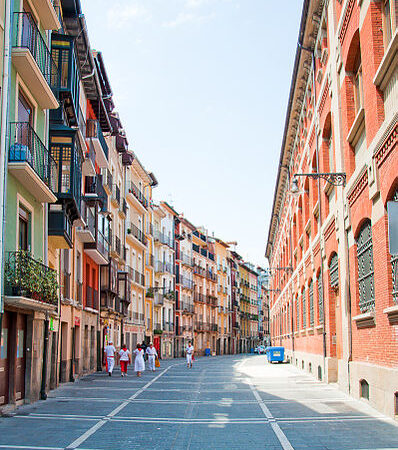
Pamplona, capital of Navarre, was traditionally founded by Pompey around 75 BC as Pompaelo, and in 778 Charlemagne razed its walls before Basques destroyed his rearguard at Roncesvalles, the battle behind the Song of Roland.
Follow the Camino through the old town past the cathedral and the star-shaped Citadel begun in 1571 under Philip II, then sit on the Plaza del Castillo at Café Iruña, a stop on the city’s Hemingway route.
During San Fermín, from 6 to 14 July, six bulls run about 850 m through the streets of Pamplona each morning, a scene Hemingway made famous in The Sun Also Rises (1926), and in 1521 a cannonball wounded Ignatius of Loyola defending the city, setting him on the road to founding the Jesuits.
14 – Salamanca

Salamanca, on the Tormes in Castile and León, is home to the oldest university in Spain in continuous operation, founded in 1218 by Alfonso IX, and its golden sandstone old city was listed by UNESCO in 1988.
See the Plaza Mayor, begun in 1729 to designs by Alberto Churriguera, the Old and New Cathedrals built side by side, the shell-covered Casa de las Conchas, and look for the frog on the university’s façade, which legend says brings exam luck to students who spot it.
The Irish College in Salamanca, founded in 1592 under Philip II to train priests for Ireland, later moved into the Fonseca Palace, long known locally as “de los Irlandeses”, and the astronaut carved on the New Cathedral is no medieval mystery but a stonemason’s signature added in 1992.
15 – San Sebastián

San Sebastián, or Donostia, curves around the bay of La Concha on the Basque coast, and after Anglo-Portuguese troops stormed and burned it on 31 August 1813 it was rebuilt as a Belle Époque resort for Queen Maria Christina, whose Miramar Palace was completed in 1893.
Ride the 1912 funicular up Monte Igueldo for the view, walk to Eduardo Chillida’s Peine del Viento sculptures of 1977 at the end of the bay, and graze the pintxo bars of the old town.
The English Cemetery on Monte Urgull above San Sebastián holds soldiers of the British Auxiliary Legion who died in the Carlist War of the 1830s, a force commanded by the Limerick-born Sir George de Lacy Evans that included an Irish Brigade.
16 – Toledo
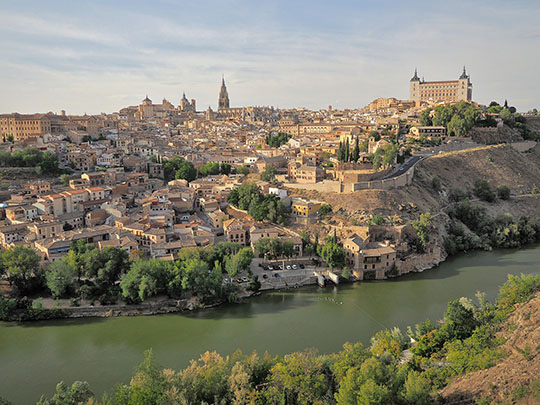
Toledo, on a rock wrapped on three sides by the Tagus about 70 km south of Madrid, was the Visigothic capital, fell to Alfonso VI in 1085 and became famous as a meeting place of Christians, Muslims and Jews, and UNESCO listed it in 1986.
See the cathedral, begun in 1226, the synagogues of Santa María la Blanca and El Tránsito, the former mosque of Cristo de la Luz from 999–1000, and El Greco’s Burial of the Count of Orgaz in the church of Santo Tomé.
From the 12th century scholars in Toledo translated Arabic learning into Latin and later Castilian, El Greco lived here from 1577 until his death in 1614, and in 1936 Nationalist troops under Colonel Moscardó held the Alcázar of Toledo for over two months until Franco’s army relieved it.
17 – Santiago de Compostela

Santiago de Compostela, in Galicia, grew around the tomb of St James, found in the early 9th century, and UNESCO listed its old town in 1985 and the Camino routes leading to it in 1993.
See the cathedral, begun in 1075, with Master Mateo’s Pórtico da Gloria of 1188 and the Baroque Obradoiro façade of 1738–50, and watch the Botafumeiro, a giant censer swung across the transept by eight men.
In 997 the Córdoban general Almanzor sacked Santiago but spared the tomb, carrying the cathedral bells to Córdoba until Ferdinand III sent them back in 1236, and Irish pilgrims traditionally set out from St James’s Gate in Dublin, with pilgrim passports stamped at nearby St James’s Church.
18 – Seville

Seville, on the Guadalquivir, became the gateway to Spain’s American empire, and UNESCO listed its cathedral, which it calls the largest Gothic building in Europe, together with the Alcázar and the Archivo de Indias in 1987.
Climb the Giralda, the Almohad minaret turned bell tower, see the tomb in the cathedral holding remains DNA studies link to Columbus, walk the Mudéjar palace and gardens of the Alcázar, and visit the tiled Plaza de España, built for the 1929 Ibero-American Exposition.
The Alcázar of Seville played the Water Gardens of Dorne in Game of Thrones and Plaza de España became Naboo in Star Wars: Attack of the Clones, and from about 1612 the city had an Irish College training priests for Ireland, later merged into the college at Salamanca.
19 – Valencia

Valencia, on the Mediterranean coast, was settled by Rome in 138 BC, taken by El Cid in 1094 and held by him until his death in 1099, and its Gothic silk exchange, La Lonja, was listed by UNESCO in 1996.
Walk or cycle the Turia Gardens, laid out in the old riverbed after the river was diverted following the 1957 flood, see Santiago Calatrava’s City of Arts and Sciences, and visit the cathedral, whose agate cup is venerated as the Holy Grail.
Every Thursday at noon the farmers of the Water Tribunal meet at the Apostles’ Door of Valencia Cathedral to settle irrigation disputes, a tradition listed by UNESCO in 2009, and the Republican government made the city its seat from November 1936 to October 1937.
20 – Costa Brava

The Costa Brava, the rugged coast of Catalonia’s Girona province, was named in 1908 by the journalist Ferran Agulló, and at Empúries Greek traders founded Emporion in 575 BC before the Romans landed there in 218 BC to begin their conquest of Hispania.
See the walled medieval Vila Vella at Tossa de Mar, Dalí’s house at Portlligat and his Theatre-Museum in Figueres, where he is buried, and Cap de Creus, the easternmost point of mainland Spain.
Ava Gardner filmed Pandora and the Flying Dutchman (1951) at Tossa de Mar on the Costa Brava, and in September 1940 the philosopher Walter Benjamin, fleeing the Gestapo, died at Portbou at its northern end.
21 – Segovia
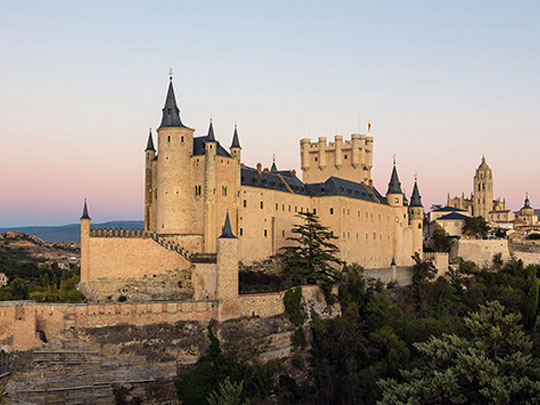
Segovia, on a ridge in Castile north-west of Madrid, is crossed by a Roman aqueduct of the late 1st or early 2nd century AD, and its old town and aqueduct were listed by UNESCO in 1985.
Walk beneath the aqueduct’s 160-plus granite arches, up to about 28 m high and built without mortar, then see the Gothic cathedral, begun in 1525 and often called the last in Spain, and the turreted Alcázar, restored after a fire in 1862.
Isabella was proclaimed Queen of Castile in Segovia on 13 December 1474, the Alcázar is often said to have inspired Disney’s castles, and the failed Republican offensive towards Segovia in 1937 is the backdrop to Hemingway’s For Whom the Bell Tolls.
22 – A Coruña
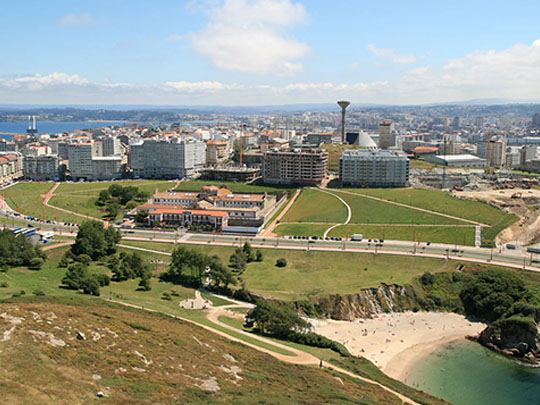
A Coruña, a port on the north-west tip of Galicia, is guarded by the Tower of Hercules, the only fully preserved Roman lighthouse in use, built in the late 1st century AD, listed by UNESCO in 2009, and the Spanish Armada sailed from here in July 1588.
See the Tower of Hercules and the statue of Breogán beside it, the glass galleries of the Avenida de la Marina, the Praza de María Pita, named after a heroine of the English attack of 1589, and the tomb of Sir John Moore, killed at the Battle of Corunna in 1809.
Irish legend says Breogán built a tower here from which his son Íth first saw Ireland, and when Red Hugh O’Donnell landed at A Coruña after Kinsale in January 1602 he went to see “Breogan’s Tower”, while the Dublin-born poet Charles Wolfe wrote “The Burial of Sir John Moore after Corunna” (1817).
23 – Cádiz
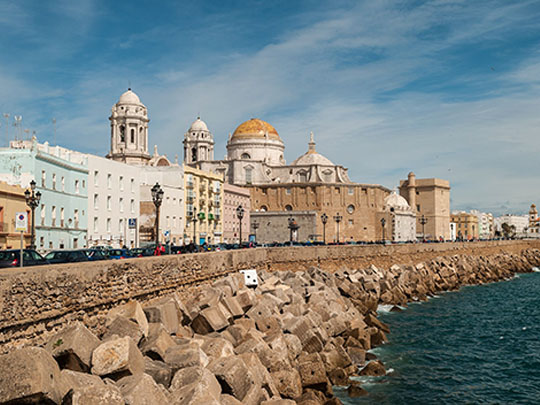
Cádiz, on a narrow peninsula on the Atlantic coast of Andalusia, was founded by the Phoenicians as Gadir, traditionally around 1100 BC, and is often called the oldest city in Western Europe.
Visit the Gadir archaeological site, with streets of the 9th century BC, the cathedral built from 1722 to 1838, and the camera obscura in the Torre Tavira, then walk the sea walls around the old town.
Drake “singed the King of Spain’s beard” by burning dozens of ships in the harbour of Cádiz in 1587, Spain’s liberal Constitution of 1812 was approved here during the French siege, and the Meath-born general Alexander O’Reilly, once governor of Spanish Louisiana, later governed the city.
24 – Altamira
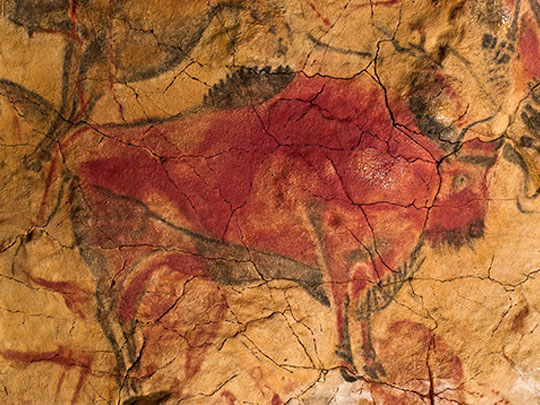
The Cave of Altamira, near Santillana del Mar in Cantabria, holds bison and other animals painted between about 36,000 and 13,000 years ago, and UNESCO listed it in 1985 and added 17 more caves of northern Spain in 2008.
Visit the Altamira Museum and its replica cave, opened in 2001, which recreates the painted ceiling, since the original cave was closed to protect the art first from visitors’ breath and later from mould.
In 1879 eight-year-old María Sanz de Sautuola spotted the bison on the ceiling of Altamira while her father explored the cave, but experts dismissed the paintings as fakes until Émile Cartailhac published his “Mea culpa d’un sceptique” in 1902, years after her father’s death.
25 – Mérida
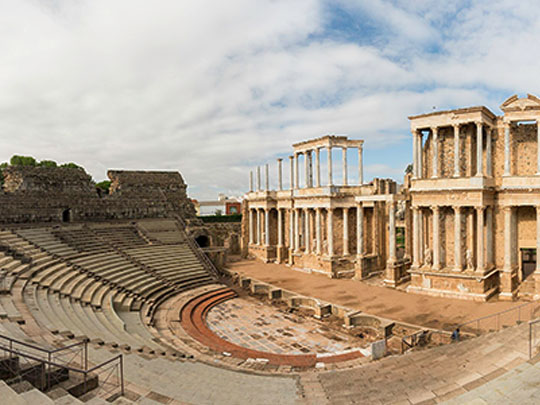
Mérida, in Extremadura, was founded by Augustus in 25 BC as Augusta Emerita for veterans of his army, became capital of the Roman province of Lusitania, and its Roman remains were listed by UNESCO in 1993.
See the Roman Theatre, built in 16–15 BC under Agrippa, the amphitheatre, the Temple of Diana, the Los Milagros aqueduct and Rafael Moneo’s National Museum of Roman Art, opened in 1986.
The Roman bridge over the Guadiana at Mérida, about 790 m long, is considered the longest surviving Roman bridge, and the Roman Theatre has staged classical drama since 1933, when Margarita Xirgu starred in Seneca’s Medea.
26 – Ávila

Ávila, at 1,132 m on the Castilian plateau west of Madrid, is ringed by walls begun around 1090 and mostly rebuilt in the 12th century, about 2.5 km long with nine gates and more than 80 towers, listed by UNESCO in 1985.
Walk the walls of Ávila, see the cathedral whose apse forms one of the towers, the convents linked to St Teresa, and the monastery of Santo Tomás, where the Grand Inquisitor Tomás de Torquemada is buried.
St Teresa of Ávila, born here in 1515, reformed the Carmelite order and in 1970 became the first woman declared a Doctor of the Church, and Adolfo Suárez, prime minister of Spain’s transition to democracy, is buried in Ávila Cathedral under the epitaph “Harmony was possible”.
27 – El Escorial
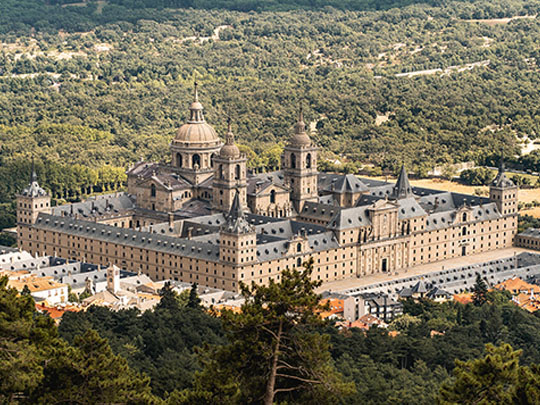
El Escorial, about 45 km north-west of Madrid, was built by Philip II from 1563 to 1584 to commemorate his victory at St Quentin in 1557 on the feast of St Lawrence, and the monastery-palace was listed by UNESCO in 1984.
See the basilica, the library of more than 40,000 printed books and the Royal Pantheon, burial place of most Spanish kings since Charles V, then visit the Valley of Cuelgamuros nearby.
Contemporaries called El Escorial the “eighth wonder of the world”, Philip II, once King of England and Ireland through his marriage to Mary I, died there in 1598, and kings’ bodies lie for decades in the pudridero, the “rotting room”, before going into their marble tombs.
28 – Valladolid
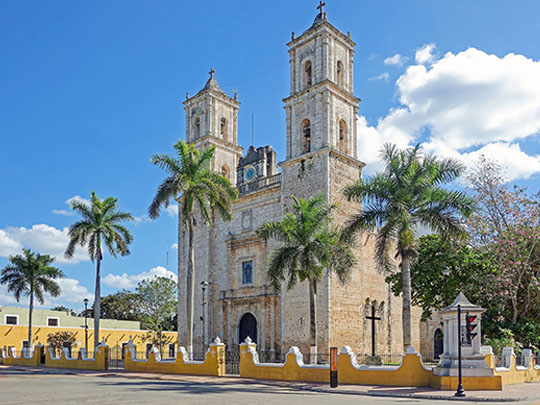

Valladolid, on the Pisuerga in Castile, was where Ferdinand and Isabella married in 1469 and Philip II was born in 1527, and it served as the capital of Spain under Philip III from 1601 to 1606.
See the Plaza Mayor, rebuilt after the fire of 1561 as a model for those of Madrid and Salamanca, the National Sculpture Museum in the Colegio de San Gregorio, where Las Casas and Sepúlveda debated the rights of the peoples of the Americas in 1550–51, and the house where Cervantes lived when Don Quixote was published in 1605.
Red Hugh O’Donnell, who died at nearby Simancas in September 1602, was buried in the Franciscan convent of Valladolid, where Columbus had been buried in 1506, and archaeologists searching the convent site in 2020 found human remains but none identified as his.
29 – Cuenca
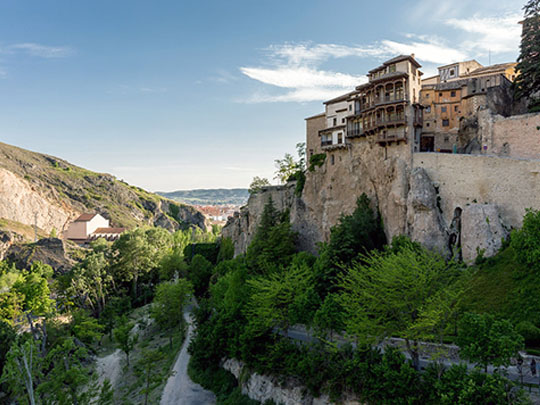
Cuenca, in Castilla-La Mancha, sits on a ridge between the gorges of the Júcar and Huécar rivers, was taken from its Muslim rulers by Alfonso VIII of Castile in 1177, and its walled old town was listed by UNESCO in 1996.
See the Casas Colgadas, the Hanging Houses over the Huécar gorge, medieval in origin and rebuilt in the 16th century, cross the San Pablo bridge, rebuilt in iron in 1902, visit the cathedral, one of Spain’s first Gothic cathedrals, and drive about 28 km to the rock formations of the Ciudad Encantada.
Fernando Zóbel opened the Museum of Spanish Abstract Art inside the Hanging Houses of Cuenca in 1966, and the cathedral’s early Gothic style is thought to reflect the influence of Alfonso VIII’s English-born queen, Eleanor Plantagenet, daughter of Henry II.
30 – Ronda
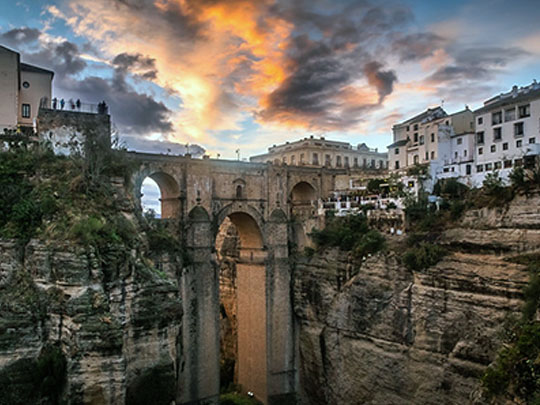
Ronda, in the mountains of Málaga province, is split by El Tajo, a gorge about 100–120 m deep, and fell to Ferdinand and Isabella in May 1485 after their troops captured the water mine that supplied the besieged town.
Cross the Puente Nuevo, built between 1759 and 1793 nearly 100 m above the river, visit the 18th-century bullring of the Real Maestranza, one of the oldest in Spain, and see the Arab baths of the 13th and 14th centuries, among the best preserved on the Iberian Peninsula.
Contrary to legend, the architect who finished the Puente Nuevo did not fall from it but died in Málaga in 1802, Hemingway called Ronda the place to go “on a honeymoon or if you ever bolt with anyone”, and Orson Welles’ ashes were buried in 1987 on a nearby ranch belonging to his friend, the matador Antonio Ordóñez.