

Wikimedia Commons / CC-BY-SA-3.0 / GFDL
Capital: Stockholm
Population: 10.6 million+
Language: Swedish; Finnish, Meänkieli, Sámi, Romani Chib and Yiddish are recognised minority languages.

1 – Stockholm (also above)

Stockholm, the capital of Sweden, spreads across islands where Lake Mälaren meets the Baltic and is first mentioned in 1252, and in November 1520 Christian II of Denmark executed more than 80 nobles there in the Stockholm Bloodbath, among them the father of Gustav Vasa, who went on to drive out the Danes.
Walk the old town of Gamla stan to the Royal Palace, with more than 600 rooms, see the warship Vasa, which sank on its maiden voyage in 1628 and was raised in 1961, and visit Skansen, opened in 1891, and the UNESCO-listed Woodland Cemetery, where Greta Garbo’s ashes lie.
The Nobel Prizes are presented in Stockholm every 10 December, the anniversary of Alfred Nobel’s death, and the Swedish Academy gave the literature prize to Yeats, Shaw, Beckett and Heaney, while “Stockholm syndrome” takes its name from a bank siege in the city in August 1973.
2 – Malmo

Malmö, Sweden’s third city, sits on the Øresund in Skåne, which Denmark ceded to Sweden under the Treaty of Roskilde in 1658, and its Malmöhus Castle, built in the 1530s, is the oldest preserved Renaissance castle in the Nordic region.
See Stortorget, laid out from 1538 with its town hall of 1547, Santiago Calatrava’s twisting 190 m Turning Torso of 2005, for years Scandinavia’s tallest building, and the Øresund Bridge to Copenhagen, opened in 2000 and the setting of the TV thriller The Bridge.
The Earl of Bothwell, third husband of Mary, Queen of Scots, was held at Malmöhus from 1567 to 1573, and in April and May 1945 the White Buses rescue brought thousands of concentration camp survivors, many of them women from Ravensbrück, across from Copenhagen to Malmö.
3 – Helsingborg

Helsingborg faces Helsingør and Kronborg, Hamlet’s Elsinore, across the narrowest point of the Øresund, about 4 km wide, and like the rest of Skåne it was Danish until 1658.
Climb Kärnan, the 35 m keep built around 1320 to control the strait, then see the town hall of 1897, whose stained glass tells the story of Helsingborg, and the rhododendron gardens of Sofiero, the royal summer palace.
On 10 March 1710 Magnus Stenbock defeated a Danish-Norwegian army outside Helsingborg, ending Denmark’s last attempt to win back Skåne, and in October 1943 boats carried Danish Jews across the strait to Helsingborg after Sweden offered them refuge.
4 – Marstrand

Marstrand, an island on the Bohuslän coast north-west of Gothenburg, was Norwegian until 1658, and Sweden then began Carlsten Fortress above the town, which fell to Danish-Norwegian forces in 1677 and again to Tordenskjold in 1719.
Walk up to Carlsten Fortress, built largely by convict labour, see the Grand Hotel of 1892, and watch the yachts in a harbour that is one of Sweden’s great sailing centres.
As a free port from 1775 to 1794 Marstrand offered religious freedom, drawing about 60 Jews who opened one of Scandinavia’s earliest synagogues, and Carlsten’s most famous prisoner was Lasse-Maja, a thief who dodged capture for years by dressing as a woman.
5 – Kosterhavet

Kosterhavet, around the Koster Islands off Sweden’s west coast near the Norwegian border, became the country’s first marine national park on 9 September 2009, opened together with Norway’s Ytre Hvaler National Park across the border.
Explore the Koster Islands and the waters around them, a park of about 389 km² that takes in the Koster Fjord, a trench up to 247 m deep fed by water from the Atlantic.
Kosterhavet holds more than 6,000 marine species, the richest marine environment in Sweden, including the country’s only reef-building coral, Lophelia pertusa, on a reef 85 m down.
6 – Gothenburg

Gothenburg, on the Göta River on Sweden’s west coast, was founded by Gustavus Adolphus in 1621, with Dutch builders laying out canals across the marshy site, and grew rich on the Swedish East India Company, chartered in 1731.
Stroll the canals and the old Haga district, see Feskekôrka, the 1874 fish market hall known as the “fish church”, and ride the rides at Liseberg, opened in 1923.
In 1745 the East Indiaman Götheborg sank at the harbour entrance almost within sight of home, the first Volvo, Latin for “I roll”, rolled out of Gothenburg on 14 April 1927, and in January 1941 five Norwegian ships broke out from here through the German blockade to Britain in Operation Rubble.
7 – Visby

Visby, on the island of Gotland in the Baltic, grew rich as a Hanseatic trading town ringed by a 3.4 km medieval wall, and UNESCO listed it in 1995.
Walk the walls and the ruins of the town’s medieval churches, of which only St Mary’s Cathedral remains in use, and join Medieval Week, held each August since 1984 to recall the Danish invasion of 1361.
On 27 July 1361 about 1,800 Gotlanders died fighting Valdemar IV of Denmark outside the walls of Visby before the town surrendered, and on 24 November 1944 a Soviet submarine torpedoed the Visby ferry Hansa, killing 84 of the 86 on board.
8 – Icehotel Jukkasjarvi

The Icehotel at Jukkasjärvi, in Swedish Lapland about 200 km north of the Arctic Circle, began in 1989 with ice art beside the Torne River, and when visitors slept over in it the idea of a hotel built of ice was born.
Stay in rooms carved by artists from Torne River ice and rebuilt every winter, or in Icehotel 365, kept frozen all year since 2016, then see the wooden church of Jukkasjärvi, the oldest building in the village.
Each spring the Icehotel melts back into the Torne River it was cut from, the first Absolut Icebar opened here in 1994, and the altarpiece of Jukkasjärvi church, a triptych by Bror Hjorth given in 1958, tells the life of the preacher Lars Levi Laestadius.
9 – Ystad

Ystad, on the south coast of Skåne, was Danish until 1658 and keeps about 300 half-timbered houses and Greyfriars Abbey, founded for the Franciscans in 1267 and one of the best-preserved monasteries in Sweden.
Explore the cobbled old town and St Mary’s Church, then head to Ales stenar on the cliffs nearby, a ship-shaped setting of 59 boulders about 67 m long, raised around 1,400 years ago.
According to the parish, a night watchman in the tower of St Mary’s in Ystad has blown a horn every quarter of an hour through the evening since 1748, and the town is home to Henning Mankell’s detective Kurt Wallander, played by Kenneth Branagh in the BBC series filmed here.
10 – Uppsala


Uppsala, north of Stockholm, grew beside Gamla Uppsala, where three great royal mounds of the 5th and 6th centuries mark the old heart of the Svea kingdom, and its university, founded in 1477, is the oldest in the Nordic countries.
See Uppsala Cathedral, at 118.7 m the tallest church in Scandinavia and burial place of Gustav Vasa and Linnaeus, the Gustavianum with its anatomical theatre of 1662, the Linnaeus Garden and the Silver Bible, a 6th-century Gothic gospel book in the Carolina Rediviva library.
Adam of Bremen wrote in the 11th century of a pagan temple at Uppsala where nine males of every kind were sacrificed every nine years, Queen Christina gave up her crown at Uppsala Castle in 1654, and Anders Celsius devised his temperature scale here in 1742, with 0 as boiling and 100 as freezing.
11 – Birka

Birka, on the island of Björkö in Lake Mälaren about 30 km west of Stockholm, was a Viking trading town from about 750 to the late 10th century, and UNESCO listed it with the royal estate of Hovgården on neighbouring Adelsö in 1993.
Walk the hillfort, ramparts and grave mounds of Birka, where more than 3,000 graves have been found, then cross to Hovgården to see its 11th-century runestone and the ruins of the royal palace of Alsnö hus.
The missionary Ansgar arrived at Birka around 830 and founded the first Christian congregation in Sweden, and in 2017 DNA tests showed that grave Bj 581, buried with a sword, axe, spears and two horses, belonged to a woman.
12 – Kalmar

Kalmar, on Sweden’s south-east coast facing the island of Öland, was where Erik of Pomerania was crowned on 17 June 1397, launching the Kalmar Union of Denmark, Norway and Sweden under Margaret I, which lasted until 1523.
See Kalmar Castle, turned into a Renaissance palace by Gustav Vasa and his sons Erik XIV and John III, the Baroque cathedral designed by Nicodemus Tessin the Elder, and the 6 km Öland Bridge, opened in 1972.
In 1638 the Kalmar Nyckel, the “Key of Kalmar”, carried Swedish colonists to America, where they built Fort Christina, on the site of Wilmington, Delaware, the first permanent European settlement in the Delaware Valley.
13 – Falun

Falun, in Dalarna in central Sweden, grew around the Great Copper Mountain, mined for more than a thousand years until 1992 and the source of as much as two-thirds of Europe’s copper in the 17th century, and UNESCO listed the mining area in 2001.
Go underground in the Falun mine and look into the Great Pit, which collapsed on Midsummer’s Eve 1687 while the miners were on holiday, then visit Carl Larsson’s house at Sundborn nearby, a gift from his wife’s father in 1888.
In 1719 miners at Falun found the body of Mats Israelsson, lost around 1677 and preserved by copper sulphate, a story retold by E.T.A. Hoffmann in “The Mines of Falun”, and the mine’s waste gave Sweden the falu red paint that colours its cottages.
14 – Karlskrona

Karlskrona, on islands off Sweden’s south-east coast, was founded by Charles XI in 1680 as the base of the Swedish navy, and UNESCO, which listed it in 1998, calls it the best-preserved naval city in Europe.
See the Naval Museum, the wooden Admiralty Church of 1685 with its poor-box figure Rosenbom, who talks with Nils in Selma Lagerlöf’s The Wonderful Adventures of Nils, and the Drottningskär Citadel, built from 1680 to guard the deep channel into the port.
On 27 October 1981 the Soviet submarine known as U-137 ran aground about 10 km from the Karlskrona naval base, a Cold War incident nicknamed “Whiskey on the Rocks”, and Sweden later announced it had detected radiation aboard.
15 – Abisko and Kiruna
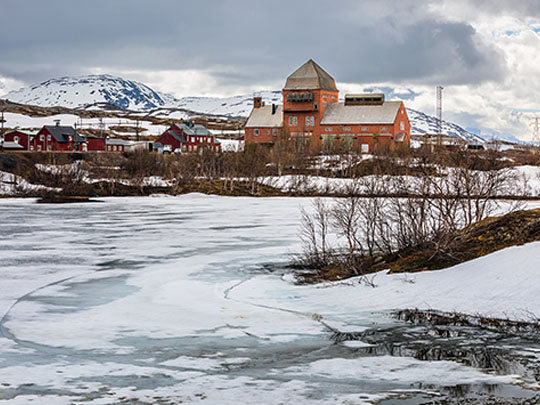
Abisko and Kiruna lie in Swedish Lapland, far above the Arctic Circle, where Abisko National Park was one of nine parks created in 1909, the first national parks in Europe, and Kiruna was founded around 1900 for the ore of Kiirunavaara, the world’s largest underground iron ore mine.
Watch the northern lights from the Aurora Sky Station on Mount Nuolja above Abisko, walk to the U-shaped valley of Lapporten or set off on the Kungsleden trail, and see Kiruna Church of 1912, built in the shape of a Sámi hut.
Ore from Kiruna travelled by rail to the ice-free Norwegian port of Narvik, giving Germany much of its iron in WWII and drawing both sides into the battle for Narvik in 1940, while Esrange, near Kiruna, has launched rockets since 1966.