

Wikimedia Commons / CC-BY-SA-3.0 / GFDL
Capital: Edinburgh
Population: 5.5 million+
Language: English, Scots and Scottish Gaelic.

1 – Edinburgh (also above)

Edinburgh, the capital of Scotland, grew up around a castle on the basalt plug of an extinct volcano, and its medieval Old Town and Georgian New Town, laid out to James Craig’s plan of 1767, were listed by UNESCO in 1995 as a centre of the 18th-century Enlightenment.
Edinburgh’s sights include the Royal Mile, running from Edinburgh Castle, where the Honours of Scotland are kept in the Crown Room, down to the Palace of Holyroodhouse and the Scottish Parliament, with Arthur’s Seat, another extinct volcano, and Calton Hill rising above the city.
Edinburgh’s Cowgate, then known as “Little Ireland”, was where James Connolly, executed in Dublin after the 1916 Rising, was born in 1868, and on 16 October 1939, German bombers attacked warships in the Firth of Forth near the city in the first German air raid on Britain of the Second World War.
2 – Eilean Donan

Eilean Donan sits on a small tidal island where Loch Duich, Loch Long and Loch Alsh meet in the western Highlands, and its name is thought to come from St Donnán, probably an Irish saint, who was martyred on Eigg in 617.
Eilean Donan’s sights include the arched stone footbridge and the keep, rebuilt by Lt Col John MacRae-Gilstrap and completed in 1932, so the castle is largely a 20th-century reconstruction of a stronghold first built in the 13th century, later held by the Mackenzies of Kintail with their MacRae constables.
Eilean Donan was held for the Jacobites in 1719 by a few dozen Spanish soldiers until Royal Navy frigates bombarded it and a landing party blew it up with captured gunpowder, and the rebuilt castle went on to appear in Highlander (1986) and The World Is Not Enough (1999).
3 – Loch Ness

Loch Ness fills a long, deep trench along the Great Glen Fault and holds about 7.5 km³ of water, the greatest volume of any lake in the British Isles, with Urquhart Castle on its shore, blown up by departing government troops in 1692 to keep it out of Jacobite hands.
Loch Ness’s sights include the ruins of Urquhart Castle and its Grant Tower, the village of Drumnadrochit and Fort Augustus, where the Caledonian Canal enters the loch.
Loch Ness’s “monster” is often traced to Adomnán’s Life of Columba, written about 700, in which St Columba drives off a beast in the River Ness, while the famous 1934 “Surgeon’s Photograph” was exposed as a hoax in 1994, and a Wellington bomber that ditched in the loch on 31 December 1940 was raised in 1985.
4 – Stirling

Stirling grew up around a castle on a crag of volcanic rock above the River Forth, long said to hold the key to Scotland, and on 11 September 1297 William Wallace and Andrew Moray destroyed an English army as it crossed the narrow bridge over the Forth below Stirling Castle.
Stirling’s sights include Stirling Castle, where Mary, Queen of Scots was crowned in 1543, with its restored Great Hall and carved oak Stirling Heads, and the National Wallace Monument on Abbey Craig, completed in 1869.
Stirling Bridge features in Braveheart (1995), Mel Gibson’s Oscar-winning film about William Wallace, which shot its battle scenes at the Curragh in County Kildare with Irish Army reservists playing both armies, though its Battle of Stirling Bridge famously has no bridge.
5 – Glasgow

Glasgow, on the River Clyde, grew from the church of St Mungo, by tradition buried here in the early 7th century, into a merchant and shipbuilding city, and its cathedral, consecrated in 1197, is the only medieval cathedral on the Scottish mainland to come through the Reformation largely intact.
Glasgow’s sights include the cathedral, with St Mungo’s tomb in its lower church, the City Chambers in George Square, opened by Queen Victoria in 1888 and later cast as the Vatican in Heavenly Pursuits (1986), and Charles Rennie Mackintosh’s Glasgow School of Art, gutted by fire in 2014 and 2018.
Glasgow’s river yards, among them John Brown’s at Clydebank, launched the Lusitania, HMS Hood, the Queen Mary and the QE2, and on 13 and 14 March 1941 German bombers killed 528 people in Clydebank, leaving only about seven of its 12,000 or so houses undamaged, the worst destruction in Scotland in the war.
6 – Aberdeen

Aberdeen sits on the North Sea coast between the mouths of the Dee and the Don, received its earliest surviving charter from William the Lion around 1179, and became the centre of Britain’s North Sea oil industry after the Forties field was found in 1970.
Aberdeen’s sights include King’s College in Old Aberdeen, founded in 1495, the fortified granite St Machar’s Cathedral and the soaring front of Marischal College, often described as the second-largest granite building in the world after the Escorial in Spain.
Aberdeen suffered more than 30 German air raids in the Second World War, and its heaviest, on 21 April 1943, killed more than 120 people, 27 of them soldiers, hitting Bedford Road and the Middlefield area hardest.
7 – Fingal’s Cave

Fingal’s Cave cuts into Staffa, a small uninhabited island off Mull built of six-sided basalt columns that formed as lava cooled about 60 million years ago, the geological twin of the Giant’s Causeway in County Antrim, and the naturalist Joseph Banks made it famous after his visit in 1772.
Fingal’s Cave opens beside a natural causeway of broken columns running along the cliff to its mouth, and puffins breed on Staffa, given to the National Trust for Scotland in 1986.
Fingal’s Cave takes its name from Fingal, James Macpherson’s version of Fionn mac Cumhaill in the Ossian poems, and legend makes Staffa the Scottish end of Fionn’s causeway, while Mendelssohn’s Hebrides overture grew out of his 1829 trip to the islands, which took him to Staffa.
8 – Fort William

Fort William, at the head of Loch Linnhe below Ben Nevis, at 1,345 m the highest mountain in the UK, grew around a fort first built in 1654 for Cromwell’s army and rebuilt in 1690, when it was named after William III.
Fort William’s sights include the end of the West Highland Way, the eight locks of Telford’s Neptune’s Staircase at Banavie on the Caledonian Canal, and the Glenfinnan Viaduct to the west, which carries the Hogwarts Express in the Harry Potter films.
Fort William lies close to Achnacarry, where more than 25,000 men trained with live ammunition at the Commando Basic Training Centre in the Second World War, and the Commando Memorial at Spean Bridge, unveiled by Queen Elizabeth, the Queen Mother, in 1952, looks out over the hills that were their training ground.
9 – Isle of Skye


The Isle of Skye, largest of the Inner Hebrides, was MacLeod and MacDonald country, where in 1746 Flora MacDonald smuggled the fugitive Bonnie Prince Charlie across the sea disguised as her Irish maid, “Betty Burke”, and it later became a flashpoint of the Highland Clearances.
The Isle of Skye’s sights include the jagged Cuillin, the Old Man of Storr, the Quiraing, the pleated cliffs of Kilt Rock and Dunvegan Castle, the MacLeod chiefs’ seat from the 13th century.
The Isle of Skye saw the Battle of the Braes in April 1882, when crofters who had heard of Ireland’s Land League while fishing off Kinsale, County Cork, clashed with police from Glasgow, a stand that helped bring about the Crofters’ Holdings Act of 1886, while about 50 footprints at Brothers’ Point are among the oldest stegosaur tracks known.
10 – Glen Coe, Scottish Highlands

Glen Coe, in the western Scottish Highlands, is what remains of an ancient volcano, and on 13 February 1692 soldiers who had been guests of the MacDonalds of Glencoe for over a week turned on their hosts, killing 38 by the traditional count, under orders signed by William III and pressed by the Master of Stair.
Glen Coe’s sights include the Three Sisters of Bidean nam Bian, Buachaille Etive Mòr and Ossian’s Cave, named for Oisín, son of Fionn mac Cumhaill, who tradition says was born in the glen.
Glen Coe was where geologists in 1909 named “cauldron subsidence”, showing that the heart of the old volcano had collapsed into the magma below, and the glen forms the backdrop to the James Bond film Skyfall (2012).
11 – Inverness

Inverness stands where the River Ness meets the Moray Firth, was made a city to mark the millennium in 2000, and is where Shakespeare set Macbeth’s castle.
Inverness’s sights include Inverness Castle, built in 1833–36 on the site of the medieval castle, the wooded Ness Islands and the Town House of 1882, with the Clava Cairns, a Bronze Age cemetery of passage graves, ring cairns and standing stones often linked with the stones of Outlander, to the east.
Inverness hosted the first British Cabinet meeting held outside London, in its Town House on 7 September 1921, when Lloyd George broke off his Highland holiday, and the “Inverness Formula” drafted there became the basis for the talks that led to the Anglo-Irish Treaty.
12 – Loch Lomond

Loch Lomond, the largest lake in Great Britain by surface area, straddles the Highland Boundary Fault north-west of Glasgow and lies at the heart of Loch Lomond and The Trossachs, established in 2002 as Scotland’s first national park.
Loch Lomond’s sights include Ben Lomond, the most southerly Munro, the village of Luss and the islands, among them Inchcailloch, with its medieval church ruins, and Inchmurrin, the largest freshwater island in Great Britain.
Loch Lomond’s island of Inchcailloch is where St Kentigerna, daughter of Cellach Cualann, King of Leinster, lived as a hermit until her death in 733 or 734, and the song “The Bonnie Banks o’ Loch Lomond”, first published around 1841, is often read as a Jacobite soldier’s farewell, though its origins are unknown.
13 – Iona
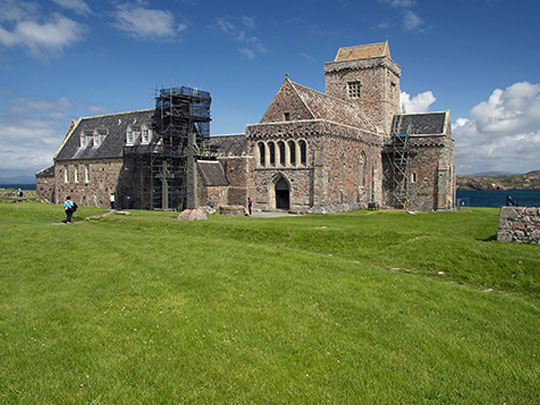
Iona, a small island off the south-west tip of Mull in the Inner Hebrides, is where St Columba, born at Gartan in County Donegal around 521, landed from Ireland with 12 companions in 563 and founded the monastery that became the mother house of the Columban Church.
Iona’s sights include Iona Abbey, its living quarters rebuilt from 1938 by the Iona Community, St Martin’s Cross, carved in the 8th century and thought to stand in its original socket, the medieval nunnery and Reilig Odhráin, where tradition says 48 Scottish kings lie, Macbeth among them.
Iona is where the Book of Kells was probably made, around 800, before Viking raids, including the killing of 68 monks in 806, drove much of the community to Kells in County Meath, and in Shakespeare’s Macbeth, King Duncan’s body is “carried to Colmekill”, Iona’s old name.
14 – Heart of Neolithic Orkney
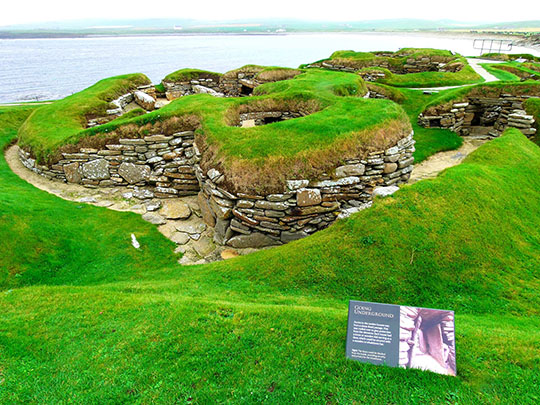
The Heart of Neolithic Orkney, on Mainland Orkney off Scotland’s north coast, brings together four Stone Age monuments about 5,000 years old, Skara Brae, Maeshowe, the Stones of Stenness and the Ring of Brodgar, listed by UNESCO in 1999.
The Heart of Neolithic Orkney’s sights include Skara Brae, a village uncovered by a storm in 1850 with its stone dressers and box-beds in place, the Ring of Brodgar, built with 60 stones in a circle about 104 m across, and Maeshowe, where the setting sun lights the back wall for weeks around the winter solstice.
The Heart of Neolithic Orkney’s great tomb, Maeshowe, is, like Newgrange in County Meath, a passage tomb aligned on the midwinter sun, and Norse visitors who broke into it in the 12th century left about 30 runic inscriptions, including “Ingigerth is the most beautiful of women” and a claim that a great treasure lies hidden to the north-west.
15 – Culloden
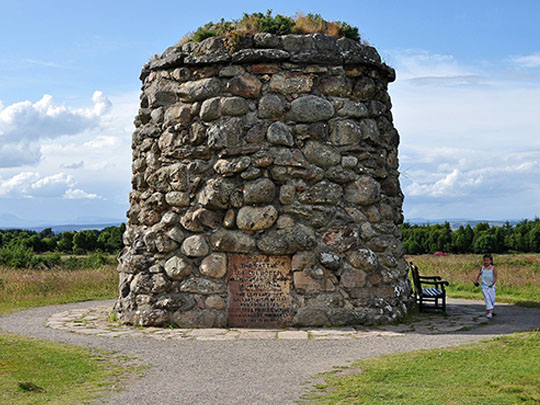
Culloden, on Drummossie Moor east of Inverness, is where on 16 April 1746 the Duke of Cumberland’s government army crushed Bonnie Prince Charlie’s Jacobites in under an hour, ending the last Jacobite rising in what is often called the last pitched battle on British soil.
Culloden’s sights include the clan grave markers and memorial cairn raised in 1881, the thatched Leanach Cottage, the Well of the Dead and the National Trust for Scotland visitor centre, built in 2007.
Culloden cost about 1,500 Jacobite lives against some 50 government soldiers, with the Jacobite line drawn up by Charles’s adjutant and quartermaster-general, John William O’Sullivan, born in County Kerry, while the Irish Picquets, about 300 men from France’s Irish Brigade, held off the government dragoons as the Jacobite army retreated.
16 – Bannockburn
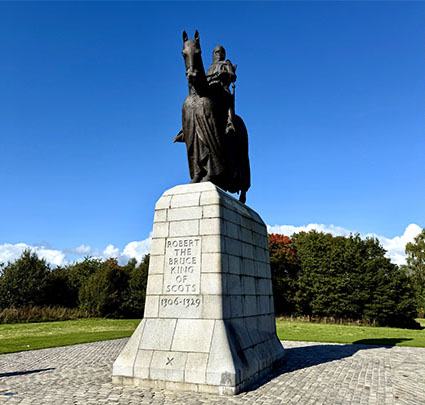
Bannockburn, just south of Stirling, is where on 23–24 June 1314 Robert the Bruce routed the larger army of Edward II, which had marched north to relieve the English garrison besieged in Stirling Castle, in the decisive Scottish victory of the Wars of Independence.
Bannockburn’s sights include the Rotunda and Pilkington Jackson’s bronze statue of Bruce on horseback, unveiled in 1964 for the battle’s 650th anniversary, on ground where the site of the main fighting was long debated.
Bannockburn opened with Bruce killing the English knight Henry de Bohun with a single blow of his axe, which by tradition broke its shaft, and the victory cleared the way for his brother Edward to land in Ulster in May 1315, be hailed King of Ireland and die at Faughart, near Dundalk in County Louth, in 1318.
17 – Arbroath Abbey
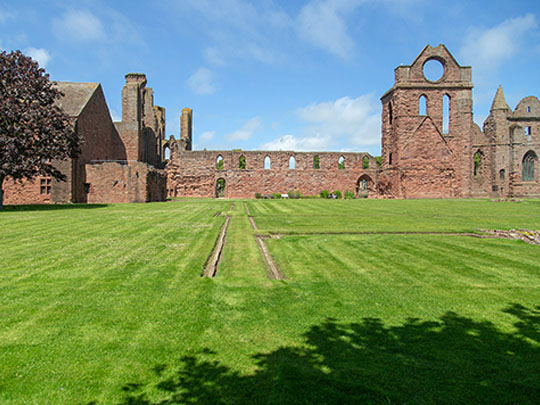
Arbroath Abbey, on the Angus coast north-east of Dundee, was founded in 1178 by William the Lion in memory of Thomas Becket, and William was buried before its high altar in 1214.
Arbroath Abbey’s sights include the red sandstone ruins, the great round window known as the “Round O”, said to have been lit as a beacon for sailors, and a visitor centre, opened in 2001, devoted to the abbey and its famous letter.
Arbroath Abbey gave its name to the Declaration of Arbroath, the 1320 letter to Pope John XXII vowing that “never will we on any conditions be subjected to the lordship of the English”, and on 11 April 1951, the Stone of Destiny, taken from Westminster Abbey by four Glasgow students on Christmas Day 1950, turned up on the site of its high altar.
18 – Cairngorms National Park
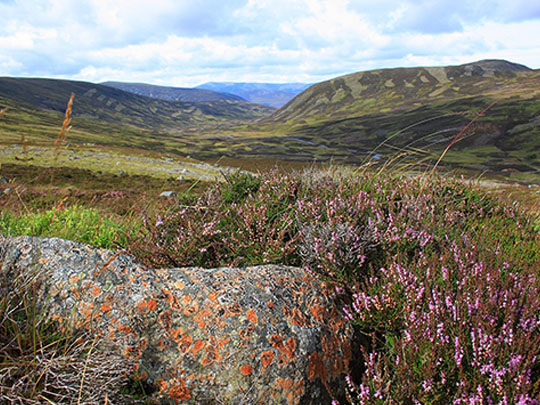

Cairngorms National Park, created in 2003 around the Cairngorm mountains of the eastern Highlands, covers 4,528 km², about 6 per cent of Scotland, and includes Ben Macdui, at 1,309 m the second-highest mountain in Britain.
Cairngorms National Park’s sights include the old Caledonian pinewoods around Glenmore and Loch Morlich, the reindeer herd brought from Sweden by Mikel Utsi in 1952, Cairn Gorm, where a 173 mph (278 km/h) gust was recorded in 1986, and Balmoral, bought by Prince Albert in 1852.
Cairngorms National Park saw Norway’s Kompani Linge train around Glenmore in the Second World War, and men from the company carried out the 1943 raid on the Vemork heavy-water plant, while on Ben Macdui the scientist Norman Collie said he fled from giant footsteps in the mist in 1891, the root of the legend of the Big Grey Man.
19 – Shetland Islands
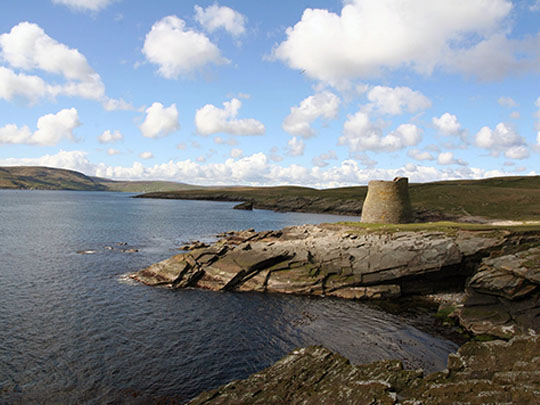

The Shetland Islands, about 100 islands, 16 of them inhabited, lie closer to Bergen than to Edinburgh, were settled by the Norse from the 800s and ruled from Norway until Christian I of Denmark-Norway pledged them in 1469 for his daughter Margaret’s dowry on her marriage to James III, a pledge never redeemed.
The Shetland Islands’ sights include Mousa Broch, an Iron Age tower about 13 m high, built around 300 BC and billed as the best preserved in Scotland, Jarlshof, with its Bronze Age, Iron Age and Norse remains, Fort Charlotte in Lerwick, begun in 1665, and Muckle Flugga lighthouse, lit by the Stevenson brothers in 1858.
The Shetland Islands’ Up Helly Aa fire festival is a Victorian creation, with its first torch procession in 1881 and its first burnt galley in 1889, while in the Second World War the “Shetland Bus” of Norwegian fishing boats ran agents and weapons into occupied Norway from Lunna and Scalloway, at a cost of 44 lives.
20 – Orkney Islands
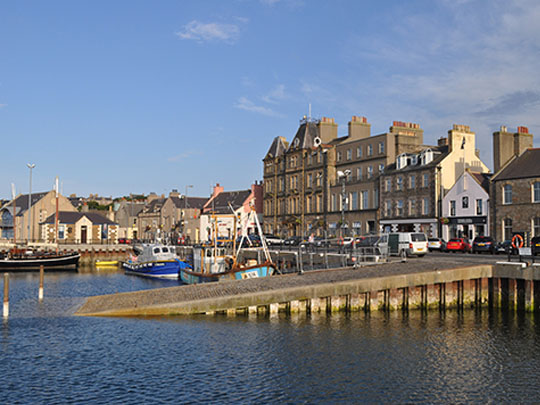

The Orkney Islands, some 70 islands off Scotland’s north coast, about 20 of them inhabited, were the heart of a Norse earldom whose story is told in the Orkneyinga Saga, until Christian I pledged them to Scotland in 1468 and James III annexed them, with Shetland, in 1472.
The Orkney Islands’ sights include St Magnus Cathedral in Kirkwall, begun in 1137 by Earl Rognvald in honour of his murdered uncle Magnus, the Bishop’s and Earl’s Palaces, the tidal Brough of Birsay, the Italian Chapel made from two Nissen huts by prisoners of war in 1943–44 and the 137 m sea stack of the Old Man of Hoy.
The Orkney Islands’ waters saw HMS Hampshire sink off Marwick Head in 1916 with the Kerry-born Lord Kitchener aboard, the German fleet scuttle 52 of its 74 interned ships in Scapa Flow on 21 June 1919, and HMS Royal Oak torpedoed there by U-47 on 14 October 1939, with the loss of 835 lives.
