
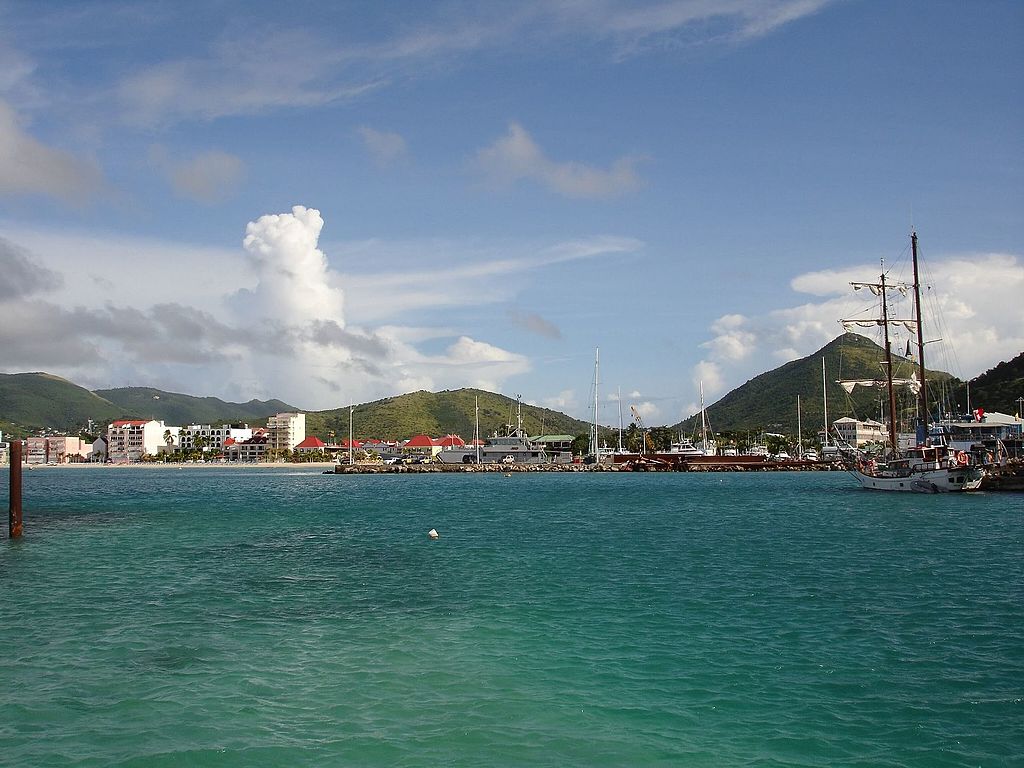
Wikimedia Commons / CC-BY-SA-3.0 / GFDL
Capital: Philipsburg
Population: 42,000+
Language: English/Dutch

1 – Philipsburg (also above)
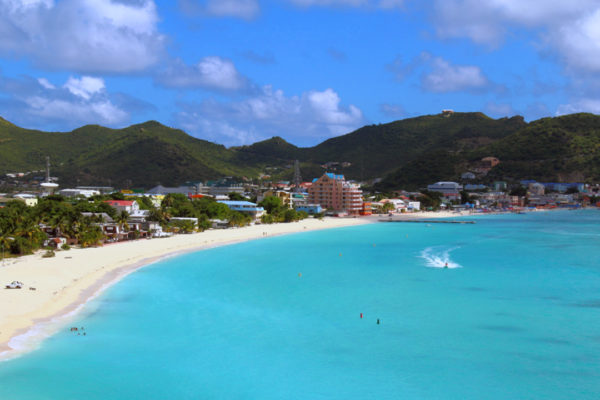
The capital is built on a sand bar barely 500 metres wide, with Great Bay on one side and the Great Salt Pond on the other — founded in 1763 by John Philips, a Scottish captain in Dutch service, to centralise the island’s trade.
Two parallel streets run the length of it: Front Street, lined with duty-free shops and restored West Indian houses, and Back Street behind, with a boardwalk along the beach and Fort Willem of 1801 on the hill above.
That pond behind the town was the whole point of the island — salt was the reason Europeans fought over Saint Martin at all, and it was raked here by enslaved labour for two centuries before tourism took over.
2 – Maho Beach
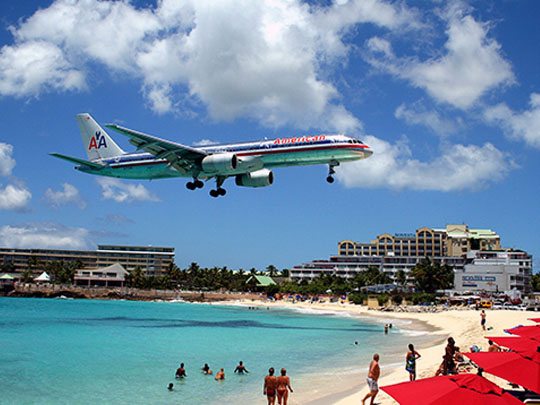
A short strip of sand on the south-west coast, Maho sits directly under the approach to Princess Juliana International Airport, with nothing between the runway and the sea but a fence and a narrow road.
Aircraft come in perhaps thirty metres overhead, close enough to read the rivets, and the bars behind the beach post the day’s arrivals board so you know when the big ones are due.
Some visitors grip the fence behind the runway to be hit by the jet blast on take-off, which is exactly as stupid as it sounds: the signs warn of serious injury or death, and in 2017 a New Zealand tourist was killed doing it.
3 – Simpson Bay
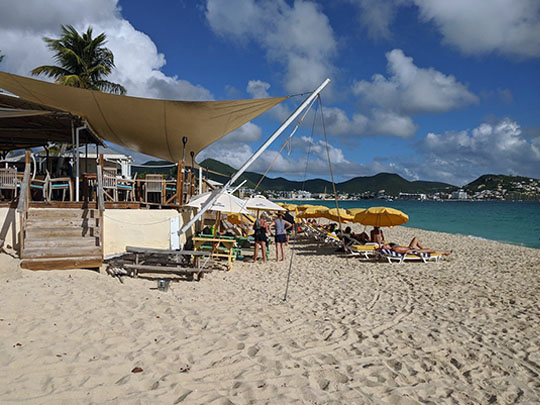
Simpson Bay sits between the airport and Philipsburg on a spit of land beside Simpson Bay Lagoon, one of the largest inland lagoons in the Caribbean and shared, like the island itself, between two countries.
The village is the island’s nightlife strip — restaurants, casinos and bars along the main road — with a good beach in front and a lift bridge into the lagoon that opens on a schedule for the yachts.
The lagoon is a serious superyacht harbour, and its bridge has been widened over the years to let bigger boats in — which is why on any given winter week you can stand at Simpson Bay and watch a few hundred million dollars’ worth of hull squeeze through a gap in a road.
4 – Fort Amsterdam
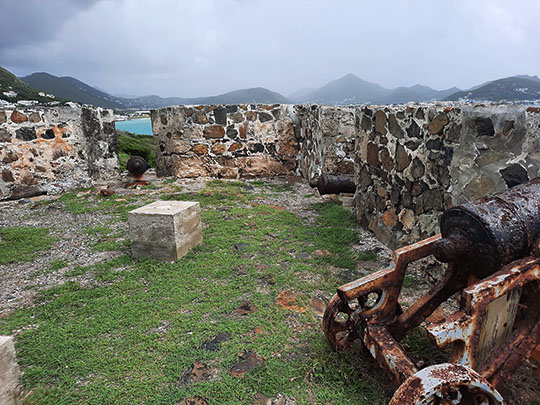
On a narrow peninsula between Great Bay and Little Bay, just west of Philipsburg, stands the first fort the Dutch ever built in the Caribbean — put up in 1631 to guard the salt trade, more than a century before the town below it existed.
What’s left is a decaying triangular ruin with rusting 19th-century cannon, reached on foot along the headland, and one of the best views on the island back over Philipsburg and the harbour.
It failed its first real test: the Spanish took it in 1633 and held it for fifteen years, and when the Dutch tried to win it back in 1644 the commander leading the assault, Peter Stuyvesant, was hit by a cannonball on the rampart and lost his leg — he recovered, took a wooden one, and went on to run New Amsterdam, the settlement that became New York.