
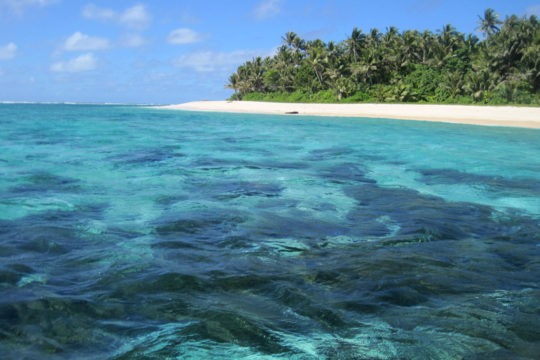
ravilacoya / Wikimedia Commons / CC-BY-SA-3.0 / GFDL
Capital: Honiara
Population: 730,000+
Language: English/Pijin
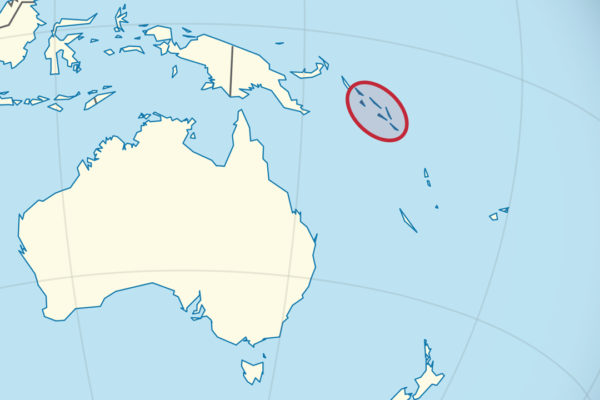
1 – Reef Islands (above)
A scatter of low coral islands and sand cays in Temotu, the easternmost province, some 600 km beyond the rest of the country — and one of the odder corners of the Pacific, because several of the islets are Polynesian outliers, where communities descended from Tuvaluan voyagers speak a Polynesian language among Melanesian neighbours.
There is essentially no tourism here: you arrive on the slow ship from Honiara or by small plane to Santa Cruz, and what you find is villages on sand cays, some of the least-touched reef in the country, and traditional deep-water sailing canoes still built and sailed in the Duff Islands nearby.
On 20 September 1871 the first Anglican Bishop of Melanesia, John Coleridge Patteson, was killed on the islet of Nukapu; the standard account is that it was payback for five men seized days earlier by blackbirders, though historians now argue the case is murkier — either way, the outcry in Britain helped push through legislation the following year aimed at curbing the Pacific labour trade.
2 – Mataniko
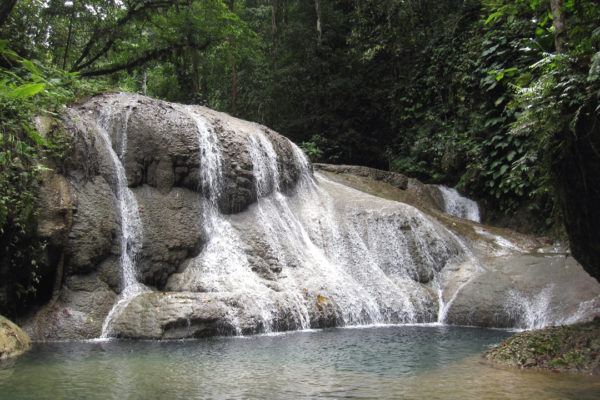
The Mataniko river comes down out of the hills and cuts through the middle of Honiara, and for three months in late 1942 the ground on either side of it was fought over again and again in some of the hardest fighting of the Guadalcanal campaign, as the American advance west from Henderson Field stalled here repeatedly.
A guided hike from a village behind Chinatown climbs the ridges above the city past foxholes and rusting shell cases before dropping into the gorge to Mataniko Falls; this is the ground James Jones wrote about in The Thin Red Line, having fought on Guadalcanal himself.
The falls come out of the mouth of a cave, and Japanese soldiers used it during the campaign to hide from American patrols — it gave them cover and fresh water in the same place, and it is still there behind the water, full of bats, which is one reason a local guide here is not optional.
3 – Gizo
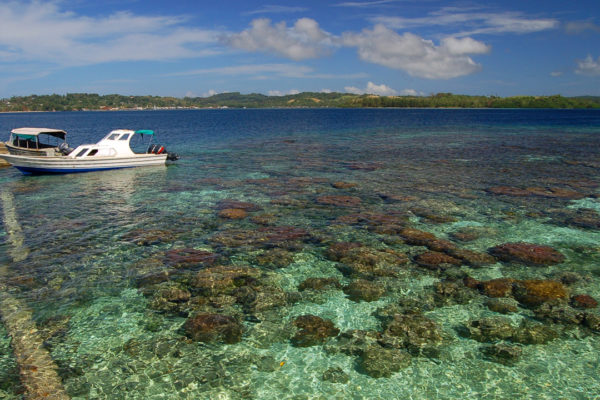
The small port town of Gizo, capital of Western Province, sits among the reefs and volcanic cones of the New Georgia group in water that saw as much naval fighting as anywhere in the Pacific — including the night in August 1943 when a Japanese destroyer cut an American patrol boat in half in Blackett Strait, not far offshore.
Gizo is the base for diving the reefs and the wrecks, and boats run fifteen minutes out to Kasolo, the tiny uninhabited islet now called Kennedy Island, where the surviving crew of PT-109 swam ashore and lived on coconuts.
The men who found them were two Solomon Islander scouts, Biuku Gasa and Eroni Kumana, working for an Australian coastwatcher; it was Gasa’s idea to scratch a message into a green coconut husk, which the pair then paddled some 60 km through Japanese-patrolled water — and when Kennedy became president they were reportedly invited to the inauguration, only to be turned back by colonial officials in Honiara.
4 – Visale
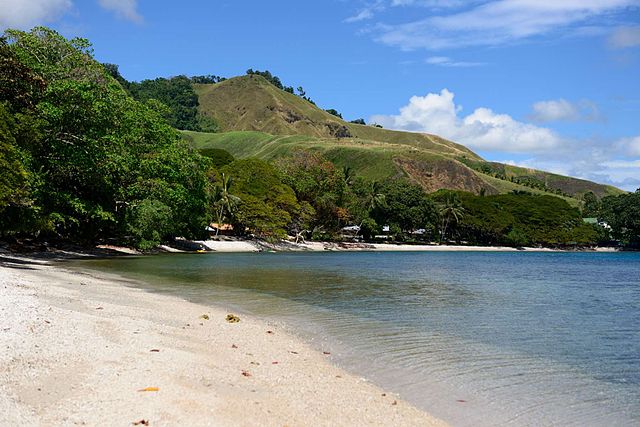
A village on the northwest coast of Guadalcanal near Cape Esperance, Visale is where French Marist priests established a station in 1904, and it grew into the headquarters of the Catholic mission for the southern Solomons — until the war, when the bishop and his staff were forced inland and the cathedral was destroyed.
The Sacred Heart church stands here still, with a teachers’ college built on the foundations of the old cathedral, and the coast road running west from Honiara passes wartime wreckage most of the way to the cape at the island’s northwestern tip.
These beaches are where the Guadalcanal campaign quietly ended: over three nights in early February 1943 Japanese destroyers lifted more than ten thousand men off the island from around Cape Esperance, and the Americans, braced for a fresh offensive, only realised the island had been given up when their patrols walked into empty positions.
5 – Marovo Lagoon
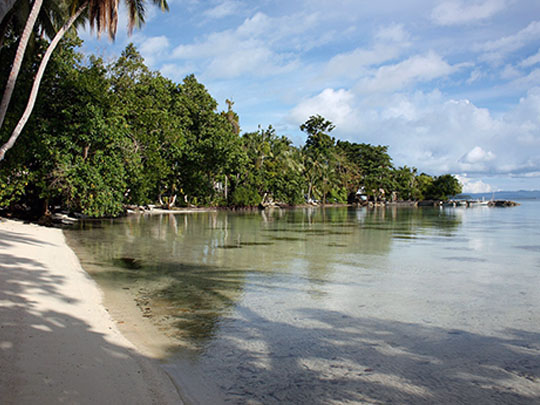
Curling around the islands of New Georgia, Vangunu and Gatokae in Western Province, Marovo is the largest double-barrier enclosed lagoon in the world — roughly 700 square kilometres of sheltered water held in by a 130 km chain of raised reef islands, with hundreds of smaller forested islets scattered through the middle of it.
Villages here are reached by boat and by nothing else, a handful of small village-run lodges take guests, and the snorkelling runs from coral gardens straight off the beach to wartime wrecks; Marovo’s carvers are the finest in the country, working ebony and kerosene wood into sharks, dolphins and ancestral figures inlaid with nautilus shell.
Twenty-five kilometres offshore lies Kavachi, one of the most active submarine volcanoes in the Pacific, which erupts almost continuously and has thrown up temporary islands up to a kilometre long before the sea washes them away again — and when a research team lowered a camera into its crater in 2015 they found hammerhead and silky sharks living inside the hot, acidic water.