
Wikimedia Commons / CC-BY-SA-3.0 / GFDL
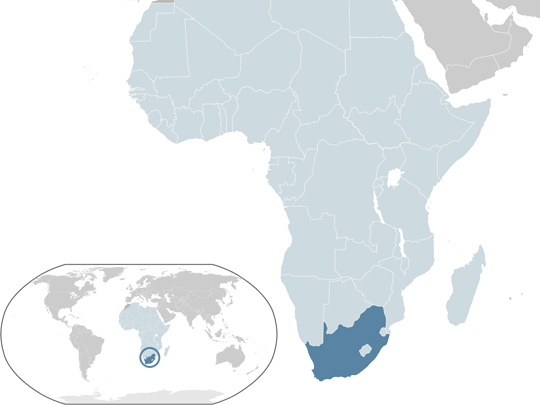
Capital: Bloemfontein (judicial), Cape Town (legislative), Pretoria (executive)
Population: 63 million+
Language: (12) Afrikaans, English, isiNdebele, isiXhosa, isiZulu, Sepedi, Sesotho, Setswana, siSwati, Tshivenda, Xitsonga, South African Sign Language
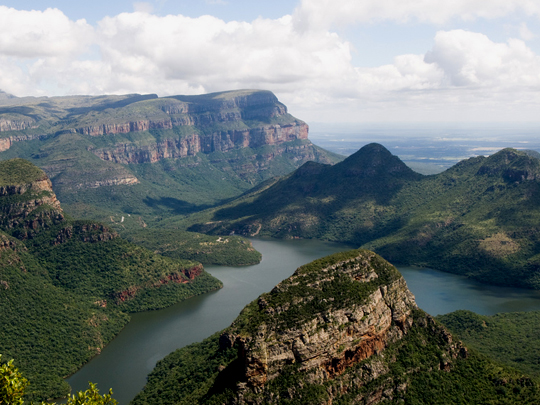
1 – Blyde River Canyon (also above)
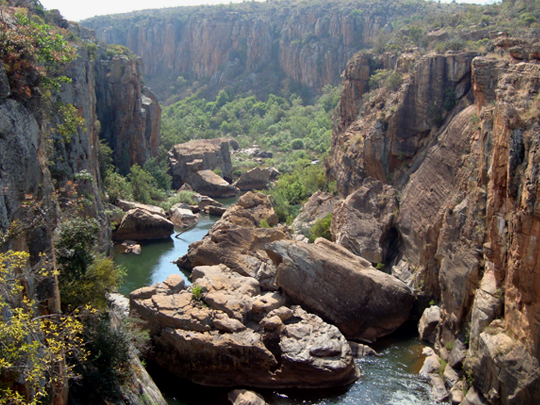
Carved by the Blyde River through the edge of the Drakensberg escarpment in eastern South Africa, the Blyde River Canyon is one of the largest canyons on Earth — and, cloaked in lush subtropical forest rather than bare desert rock, the largest “green canyon” in the world.
The centrepiece of the scenic Panorama Route, it dazzles from a string of clifftop viewpoints — the towering Three Rondavels, three round dolomite peaks like giant huts; God’s Window, where on a clear day you can see all the way to Mozambique; and Bourke’s Luck Potholes, cylindrical rock cauldrons swirled smooth by the river.
The canyon’s two rivers carry names of pure emotion: when a party of Dutch pioneers set off ahead in 1844, those left behind, fearing them dead, named their river the Treur — “river of sorrow”; when the men returned safe and the group was reunited, they joyfully christened the next river the Blyde — “river of joy.”
2 – Kruger National Park
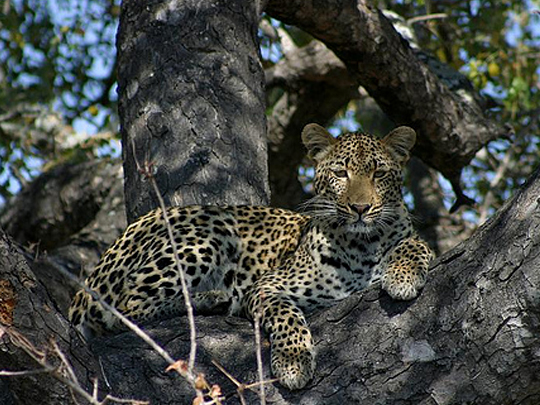
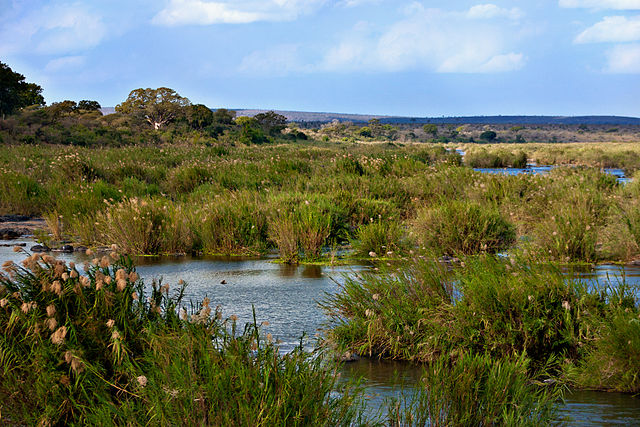
One of Africa’s oldest and greatest game reserves, Kruger National Park sprawls across the northeast of South Africa over an area roughly the size of Wales — a vast wilderness of bushveld, rivers and woodland, proclaimed back in 1898 by President Paul Kruger to save its wildlife from the hunters’ guns.
It’s the classic African safari, and one of the finest places on Earth to see the “Big Five” — lion, leopard, elephant, rhino and buffalo — among a staggering cast of giraffe, cheetah, wild dog, hippo, crocodile and more than 500 kinds of bird, whether self-driving its roads or staying at its rest camps and lodges.
For all the millions who flock here today, Kruger’s beginnings were humble — when the park first opened its gates to tourists in 1927, charging a pound a car, just three vehicles drove in the entire year.
3 – The Garden Route
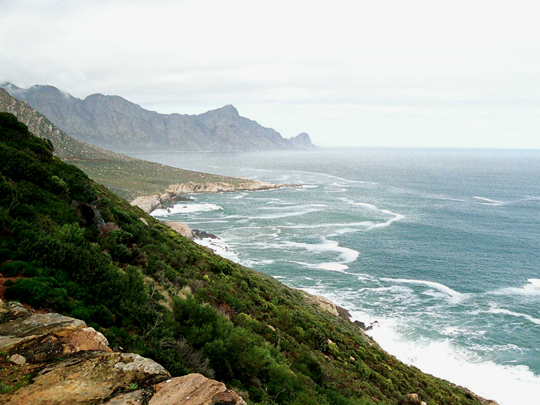
Threading along South Africa’s southern coast between the Indian Ocean and the mountains, the Garden Route is the country’s most beloved road trip — a ribbon of lush indigenous forest, tidal lagoons, golden beaches and sea cliffs so richly green it’s named for feeling like one long garden.
Over a few hundred kilometres it links a string of gems, including the lagoon town of Knysna, where the Knysna forests are home to the near-mythical Knysna elephants — a secretive, all-but-vanished herd of forest elephants that has haunted local legend for decades.
The route also has the wild beaches of Wilderness and Plettenberg Bay, and the ancient yellowwood forests and dramatic Storms River gorge of Tsitsikamma National Park — with whales and dolphins offshore and hiking, kayaking and wine tasting all along the way, while for the fearless, the route hides the Bloukrans Bridge, soaring 216m above a forested gorge, is home to the highest commercial bridge bungee jump in the world.
4 – Table Mountain
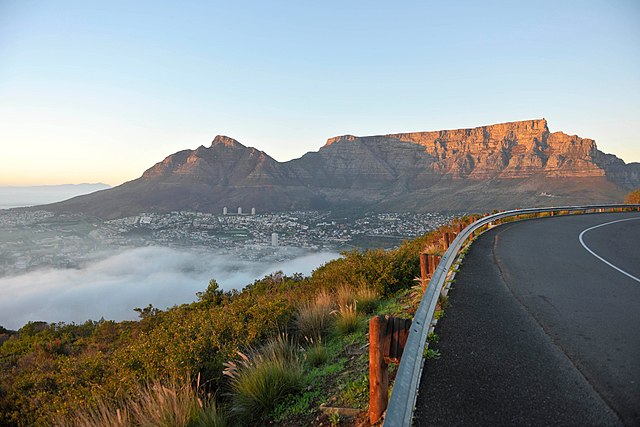
The flat-topped mountain that towers over Cape Town, Table Mountain is South Africa’s most iconic landmark and one of the New Seven Wonders of Nature — a sheer-sided sandstone plateau so ancient, its rocks some 600 million years old, that it far predates the Himalayas, the Alps or the Andes.
You can ride to the top in a revolving cable car that spins slowly for a full 360° view, or hike up through gorges scented with fynbos — the extraordinary Cape shrubland that packs more plant species onto this one mountain than grow in all of Britain; when the southeaster blows, a rolling “tablecloth” of cloud spills over the summit.
Among the rocks up top lives the dassie, a plump, furry creature that looks like an oversized guinea pig — yet, astonishingly, DNA shows that its closest living relative on Earth is the elephant.
5 – Robben Island
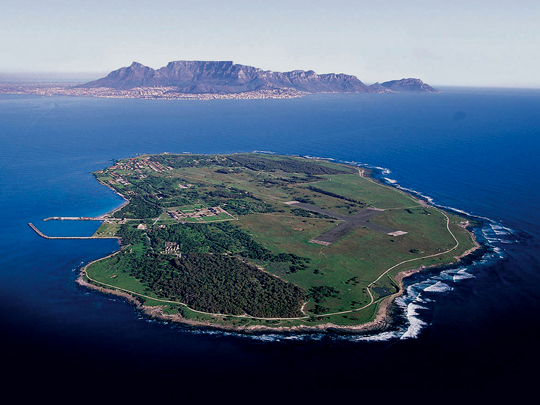
A low, windswept island in the bay off Cape Town, in sight of Table Mountain, Robben Island is one of the most powerful places in South Africa — for nearly three centuries a place of banishment, and most infamously the apartheid regime’s maximum-security prison for its political opponents; today a UNESCO World Heritage Site.
It was here that Nelson Mandela spent 18 of his 27 years behind bars, in a bare cell barely two metres wide, and toiled under the blinding glare of a lime quarry; a ferry now carries visitors across from the mainland to walk the prison corridors and stand in that tiny cell, a monument to what UNESCO called “the triumph of the human spirit.”
Perhaps the most moving part of a visit is who shows you around: many of the tours are led by former political prisoners themselves — men once locked up here who now guide visitors through the very cells and yards where they were held, telling their own stories in their own words.
6 – Cradle of Humankind
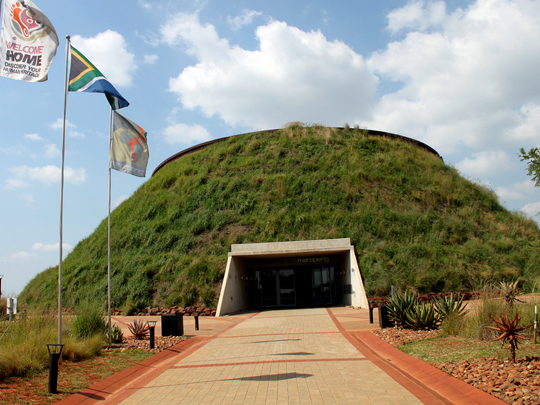
In a landscape of limestone caves an hour’s drive from Johannesburg lies the Cradle of Humankind — a UNESCO World Heritage Site that has yielded more fossils of our early human ancestors than anywhere else on Earth, and helped prove that humanity was born in Africa.
At its heart are the Sterkfontein Caves, where visitors descend into echoing chambers that gave up some of the most famous fossils ever found — including “Mrs Ples,” the two-million-year-plus skull of an Australopithecus, an ape-like ancestor who walked upright long before our own species appeared; a modern museum, Maropeng, tells the whole story of human evolution.
One of the site’s greatest treasures, a near-complete little skeleton nicknamed “Little Foot,” lay some 3.6 million years locked in rock as hard as concrete — and it took scientists around twenty painstaking years to chisel the fragile bones free.
7 – Boulders Beach
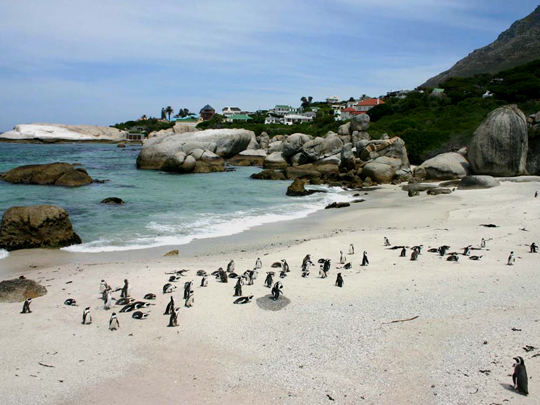
A cluster of sheltered coves nestled among giant, wave-smoothed granite boulders near Simon’s Town, on the Cape Peninsula south of Cape Town, Boulders Beach is famous for one thing above all — its resident colony of African penguins, the only penguins that breed anywhere on the African continent.
Thousands of the tuxedo-clad little birds nest in the dune bushes and waddle comically across the white sand, and from boardwalks you can watch them at arm’s length — or, at the adjoining beach, actually swim in the warm rock pools alongside them, one of the only places on Earth you can share the sea with wild penguins.
Remarkably, this whole bustling colony sprang from just two breeding pairs that settled here in 1982 — though the African penguin, once numbering in the millions, is now sadly endangered, making Boulders both a rare success story and a precious refuge.
8 – Cango Caves
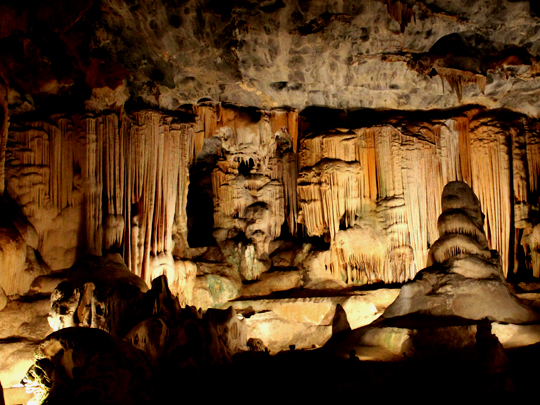
Hidden beneath the Swartberg mountains near the ostrich-farming town of Oudtshoorn, the Cango Caves are the largest cave system in Africa — a vast, echoing labyrinth of limestone chambers hung with fantastical stalactites and stalagmites, sculpted drop by drop over millions of years.
Guided tours lead down into cathedral-like halls — the biggest, Van Zyl’s Hall, is as long as a football pitch — past soaring dripstone pillars and delicate crystal formations; the more adventurous can squeeze through a series of narrow tunnels and chimneys deeper into the rock, a proper underground scramble.
The caves are South Africa’s oldest tourist attraction, and were such a hit with early visitors — who merrily snapped off stalactites and scrawled their names on the walls — that back in 1820 the Cape’s governor issued one of the world’s very first laws to protect a cave.
9 – Soweto
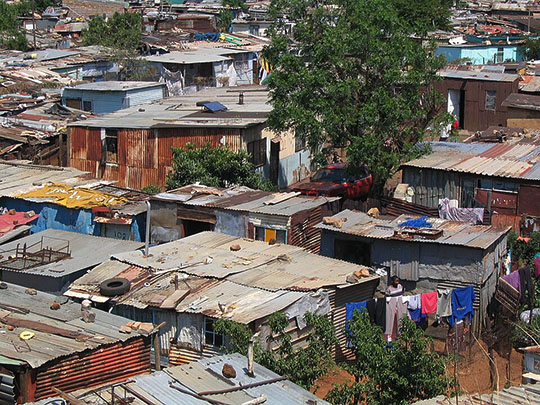

Southwest of Johannesburg lies a city within a city, built as a dumping ground: townships laid out through the twentieth century to house black workers removed from Johannesburg under successive segregation laws, and given a name that is simply an acronym of what the authorities called them — the South Western Townships. By the 1970s more than a million people lived there.
The Hector Pieterson Museum marks what happened on 16 June 1976, when schoolchildren marched against being taught in Afrikaans and police opened fire; the photograph of the dying thirteen-year-old being carried away turned world opinion against apartheid for good. Nearby stand the painted Orlando cooling towers, and back in the city the Apartheid Museum hands each visitor a ticket marked white or non-white and sends them through separate doors.
One short road in Orlando West, Vilakazi Street, is the only street on Earth to have been home to two winners of the Nobel Peace Prize: Nelson Mandela, whose small brick house is now a museum, and Desmond Tutu, a few hundred metres away.
10 – Mapungubwe
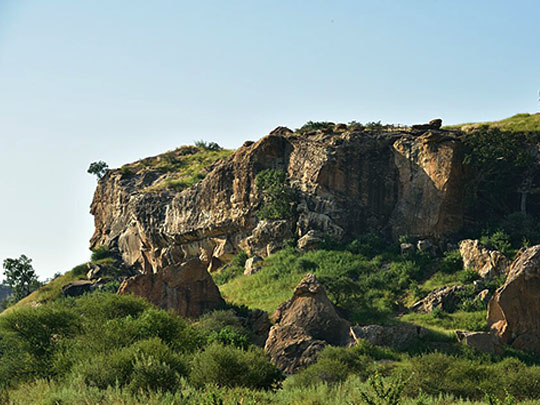
Where South Africa, Zimbabwe and Botswana meet on the Limpopo, a sandstone hill rises out of baobab country — and on it stood the capital of the first kingdom in southern Africa, a society of some five thousand people that grew rich between about 1220 and 1290 trading gold and ivory down to the Indian Ocean, three centuries before any European reached this coast; UNESCO listed it in 2003.
The royal family lived on top of the hill and everyone else below it, the earliest known class division in the region; their graves, dug into the summit, held a small wooden rhinoceros sheathed in gold foil, now in the site museum along with the rest of the treasure, with a national park of sandstone ridges and wildlife around it.
Archaeologists opened those graves in 1933 — and the apartheid state kept the findings quiet for decades, because a wealthy African kingdom made nonsense of the official story that black and white had arrived in an empty land together; the golden rhino is now a national symbol, and the country’s highest honour is the Order of Mapungubwe.
11 – Isandlwana and Rorke’s Drift

On 22 January 1879, on a plain beneath a crag shaped like a sphinx in what is now KwaZulu-Natal, a Zulu army overwhelmed the camp of a British column that had invaded their kingdom, killing something like 1,300 men — the heaviest defeat a modern European army ever suffered at the hands of an indigenous force — and a few hours later a detachment of about 150 held a mission station at Rorke’s Drift, ten miles away, against several thousand Zulu through the night.
Whitewashed stone cairns are scattered across the grass at Isandlwana, each marking where British dead were buried; both sites have small museums, and guides from the Zulu communities who still farm the ground will walk you through the day hour by hour.
Rorke’s Drift produced eleven Victoria Crosses, more than any other single action in British history — and historians have long suspected the medals were handed out so generously partly to draw attention away from the catastrophe that had happened that same morning a few miles up the road.