
By 毛貓大少爺 / Wikimedia Commons / CC BY-SA 2.0

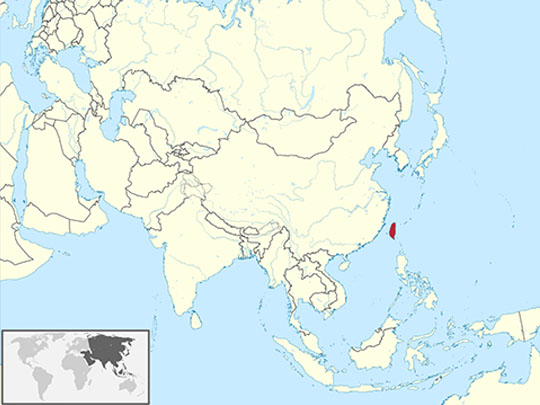
Capital: Taipei
Population: 23 million+
Language: Mandarin, Taiwanese Hokkien, Hakka, Formosan languages

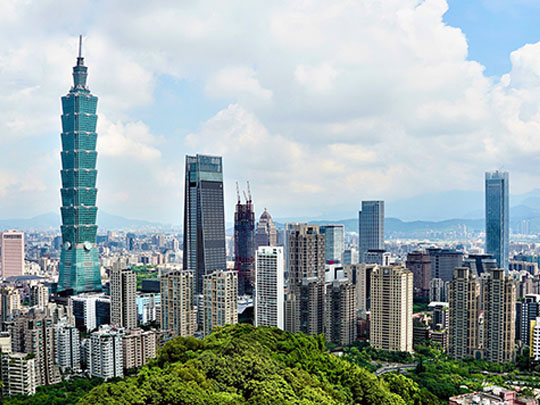
1 – Taipei (above)
In Taipei’s old Bangka district, settlers from Fujian founded Longshan Temple in 1738, and in 1919 the Japanese completed the Governor-General’s Office, which was hit in the US bombing raid of 31 May 1945 and later restored as the Presidential Office Building.
Taipei’s sights include Longshan Temple, rebuilt in 1919–24, the 76 m Chiang Kai-shek Memorial Hall on Liberty Square, 228 Peace Memorial Park with its museum of the 228 Incident of 1947, and Taipei 101, which at 508 m was the world’s tallest completed building from 2004 until 2010.
Taipei 101 is steadied by a 660-tonne steel pendulum hung from its 92nd floor, listed by Guinness World Records as the largest tuned mass damper, while across the city Longshan Temple’s statue of Guanyin survived the 1945 bombing that burned the main hall around it.
2 – National Palace Museum
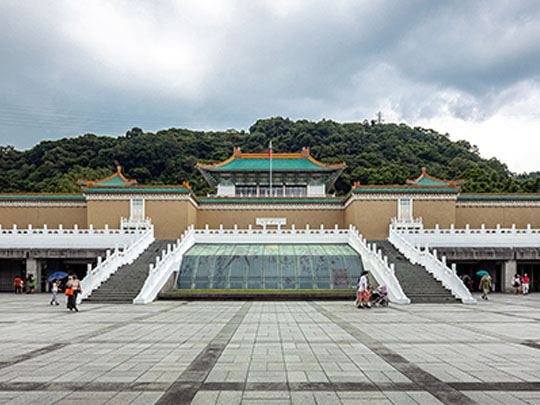

The National Palace Museum was founded in Beijing’s Forbidden City in 1925, and its treasures spent 16 years on the move, from the evacuation of nearly 20,000 crates ahead of the Japanese advance in 1933 to the shipment of 2,972 of the museum’s crates to Taiwan in 1948–49.
The National Palace Museum’s sights include the Jadeite Cabbage, the Meat-shaped Stone and galleries of bronzes, ceramics and calligraphy, drawn from a collection of nearly 700,000 objects housed in Taipei’s Shilin district since 1965.
The Jadeite Cabbage, the museum’s most popular piece, stands just 18.7 cm tall, with a locust and a katydid hidden in its leaves, and is believed to have come to the Forbidden City as part of the dowry of Consort Jin of the Guangxu Emperor.
3 – Tamsui
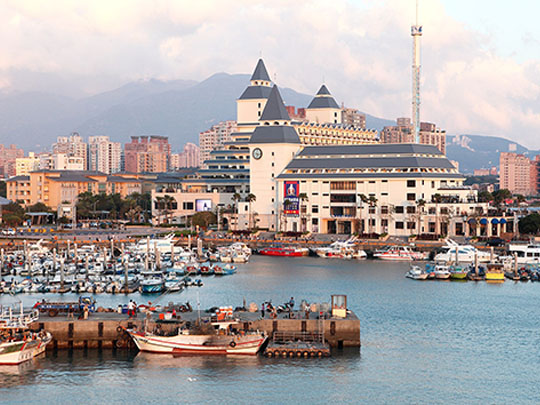

Tamsui, at the mouth of the Tamsui River, was fortified by the Spanish in the late 1620s, and the red fort the Dutch built there from 1644, Fort San Domingo, served as Britain’s consulate from the 1860s until 1972.
Tamsui’s sights include Fort San Domingo, known locally as the Fort of the Red-Haired after the Dutch, the British consular residence of 1891 beside it, the Customs Wharf, where customs work began in 1862, and Oxford College of 1882.
Tamsui was the base of the Canadian missionary George Leslie Mackay, who arrived in 1872, named Oxford College after his home county in Ontario, and pulled thousands of teeth, often as an opening for preaching.
4 – Jiufen, Jinguashi
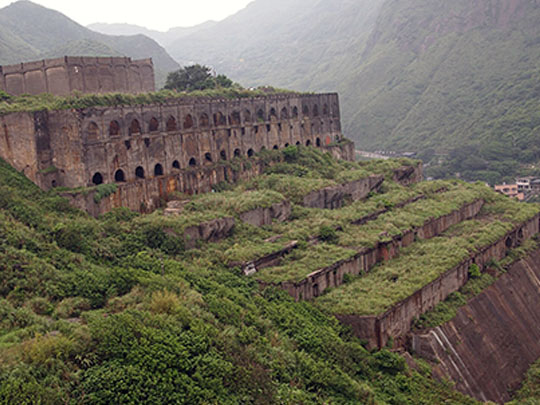

Jiufen and Jinguashi, in the hills above Taiwan’s north-east coast, boomed after gold was found in 1890, were worked for gold and copper under Japanese rule, and saw their last mine close at Jinguashi in 1987.
Jiufen’s sights include the narrow lanes of Old Street and the Shuqi Road steps, while at Jinguashi the Gold Museum, the Benshan Fifth Tunnel and the Crown Prince Chalet, built in 1922 for a visit by Hirohito that never happened, recall the mining years.
Jinguashi was the site of the Kinkaseki prisoner-of-war camp, where 1,135 Allied prisoners, most of them British, were forced to mine copper from 1942 and 111 died, while Jiufen’s much-repeated link to Spirited Away has been denied by Hayao Miyazaki.
5 – Taroko Gorge
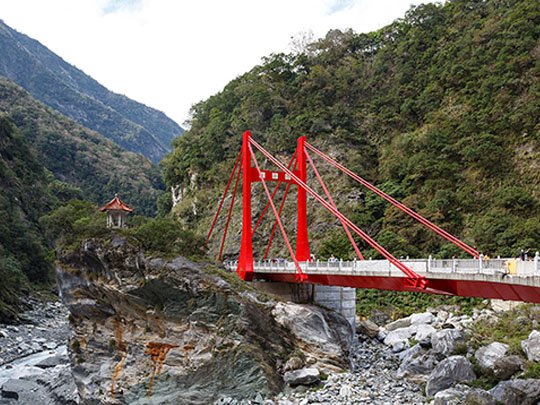

Taroko Gorge, cut almost 20 km through marble by the Liwu River in Hualien County, takes its name from the Truku people, who fought Japanese forces in the Truku War of 1914, and lies at the heart of Taroko National Park, founded in 1986.
Taroko Gorge’s sights include the pitted cliffs of Swallow Grotto, where swallows nest, the Tunnel of Nine Turns, the Shakadang Trail, Cimu Bridge and the Eternal Spring Shrine.
Taroko Gorge carries the Central Cross-Island Highway, opened in 1960 after nearly four years of dangerous work, largely by Nationalist army veterans, and the Eternal Spring Shrine honours the more than 200 workers who died building it.
6 – Sun Moon Lake
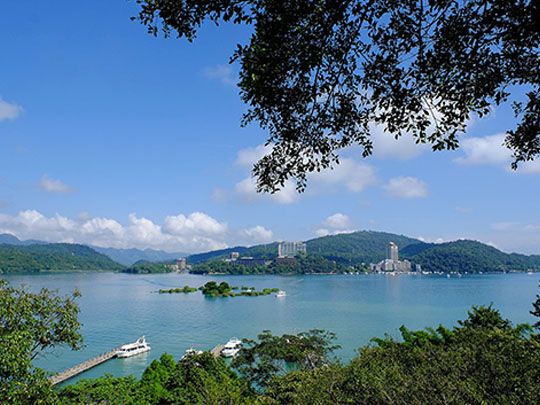

Sun Moon Lake, 748 m up in Nantou County, is the homeland of the Thao, one of Taiwan’s smallest Indigenous peoples, and was enlarged by a Japanese hydroelectric dam completed in 1934, which raised the water and pushed the Thao from their lakeside homes.
Sun Moon Lake’s sights include the Wenwu Temple, the Ci’en Pagoda built on Chiang Kai-shek’s orders in memory of his mother, the Thao village of Ita Thao and Lalu Island, the Thao people’s holy ground.
Sun Moon Lake’s Xuanzang Temple keeps a bone fragment revered as a relic of Xuanzang, the 7th-century monk who travelled to India, which Japanese troops unearthed in Nanjing in 1942 and a Japanese temple gave to Taiwan in 1955.
7 – Alishan
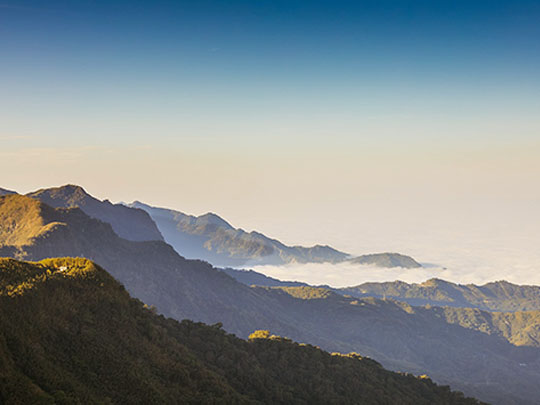

Alishan, in the mountains of Chiayi County, was opened up by the Japanese for logging red cypress through the Alishan Forest Railway, a 762 mm narrow-gauge line that opened in 1912 and climbs from 30 m at Chiayi to 2,216 m.
Alishan’s sights include the line’s Dulishan spiral and four switchbacks, sunrise over the sea of clouds from Zhushan, Taiwan’s highest railway station, and the remains of the Sacred Tree, a red cypress some 3,000 years old.
Alishan looks out towards Yushan, which at 3,952 m is higher than Mount Fuji, so Japan renamed it Niitakayama, “New High Mountain”, and “Climb Mount Niitaka 1208” became the coded go-ahead for Japan’s attack on the US fleet in Hawaii on 7 December 1941.