
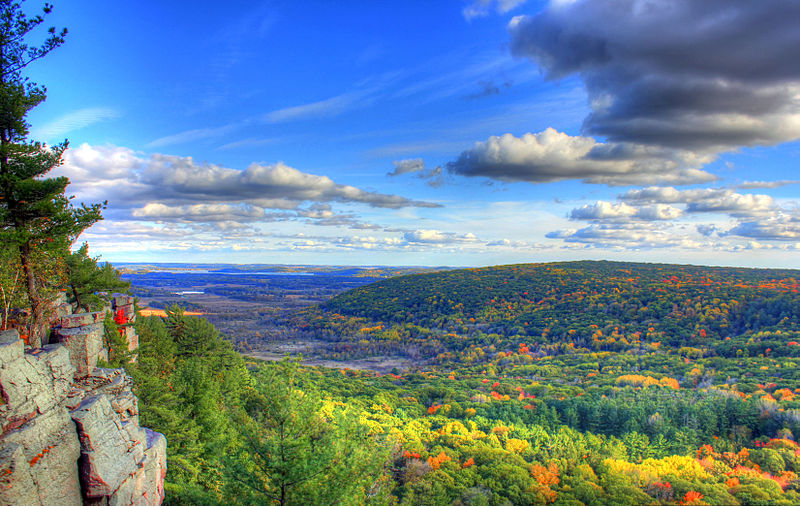
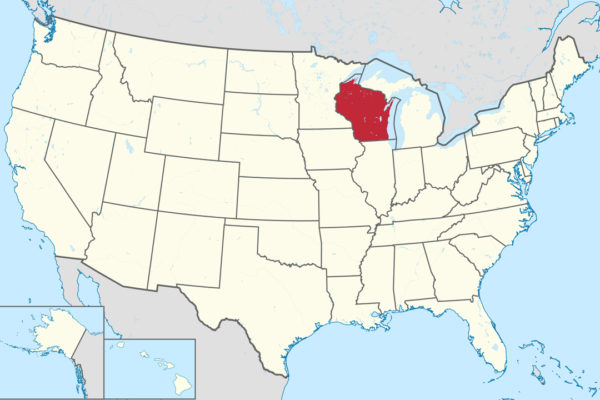
Wikimedia Commons / CC-BY-SA-3.0 / GFDL
Capital: Madison
Population: 5.9 million+
Language: English (no official language).
1 – Devil’s Lake State Park (also above)
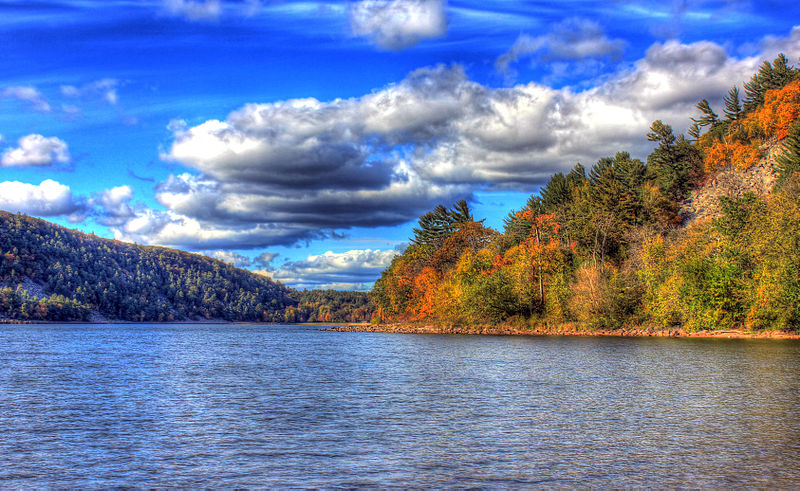
Devil’s Lake State Park near Baraboo in Sauk County fills an old gorge of the Wisconsin River that glacial moraines plugged at both ends, ringed by quartzite bluffs about 1.6 billion years old, and it became a state park in 1911.
Devil’s Lake’s sights include the bluff trails to Balanced Rock and Devil’s Doorway, a stretch of the Ice Age Trail, stone steps and buildings from the Civilian Conservation Corps, and effigy mounds on both shores, including a Bird Mound counted among the largest in Wisconsin.
Devil’s Lake’s name is likely a settler misreading of the Ho-Chunk Te Wakącąk, meaning “sacred” or “holy” lake, and tourists have been coming since the Minniwauken House hotel opened on its shore in 1866.
2 – Milwaukee
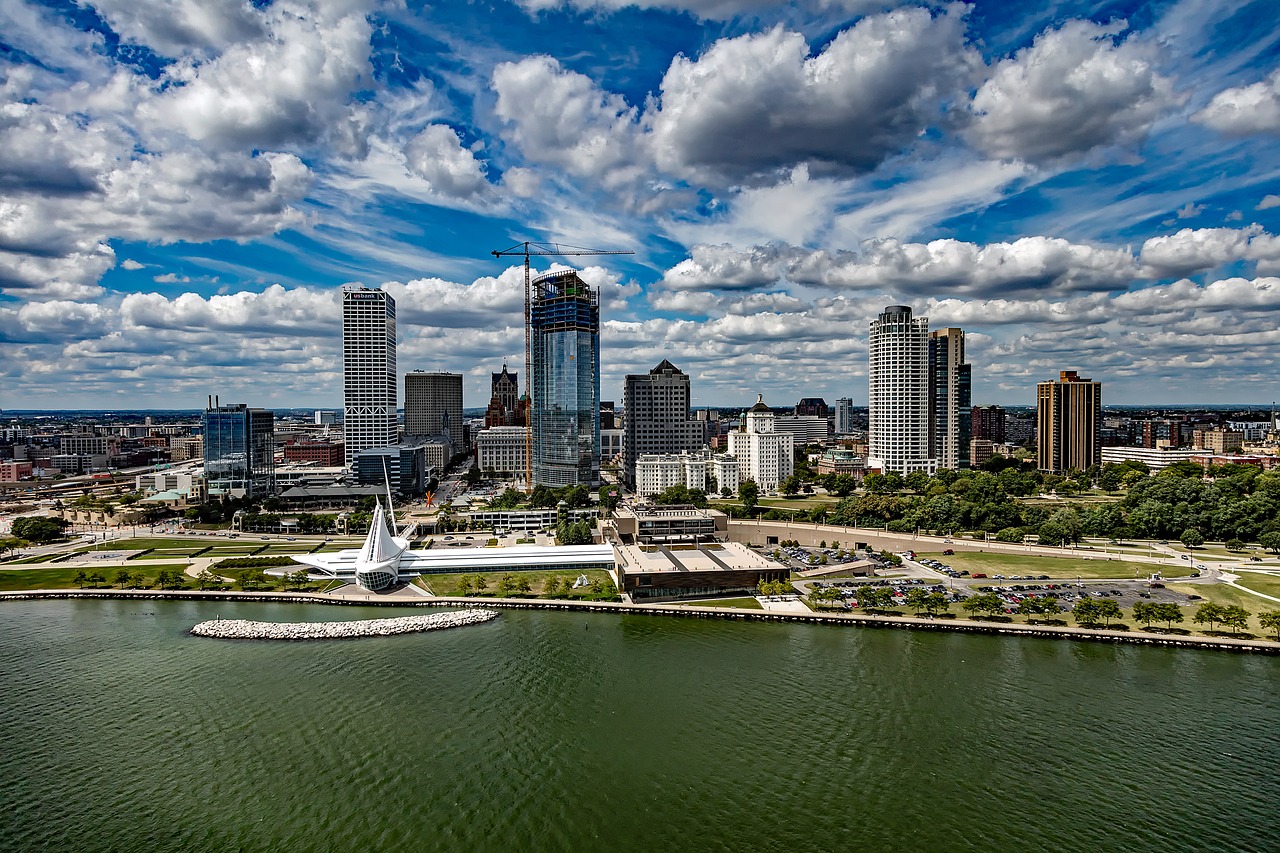
Milwaukee was formed on 31 January 1846 from three rival settlements, Juneautown, Kilbourntown and Walker’s Point, after an 1845 “Bridge War” in which east-siders and west-siders tore down each other’s bridges, and its name is often translated as “good land” or “gathering place by the water”.
Milwaukee’s sights include Santiago Calatrava’s Quadracci Pavilion at the Milwaukee Art Museum, whose 217-ft “wings” open and close, the lakefront home of Summerfest, certified by Guinness in 1999 as the world’s largest music festival, and the Bronze Fonz on the Riverwalk.
Milwaukee’s Schlitz and Pabst were the world’s two largest breweries in the late 1800s, Happy Days and Laverne & Shirley were set here, and its Irish story runs from the 1860 Lady Elgin disaster, which killed about 300 people, most of them from the Irish Third Ward, to Irish Fest, billed as the largest celebration of Irish culture in the world.
3 – Mirror Lake State Park
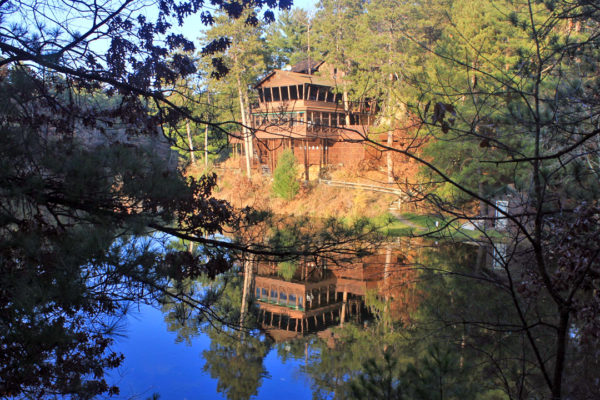
Mirror Lake State Park near Lake Delton and Wisconsin Dells in Sauk County surrounds a lake created when Dell Creek was dammed in 1860 to power a mill, and the park opened in 1966.
Mirror Lake’s sights include its sandstone cliffs, calm no-wake water for canoeing and kayaking, and the Seth Peterson Cottage, signed off by Frank Lloyd Wright in 1958 as one of his last designs and, at 880 sq ft, the smallest Wright house in Wisconsin.
Mirror Lake’s Seth Peterson Cottage was the first Frank Lloyd Wright house anyone could rent for the night, though neither Wright, who died in 1959, nor its client, Seth Peterson, who died in 1960, lived to see it finished.
4 – Madison
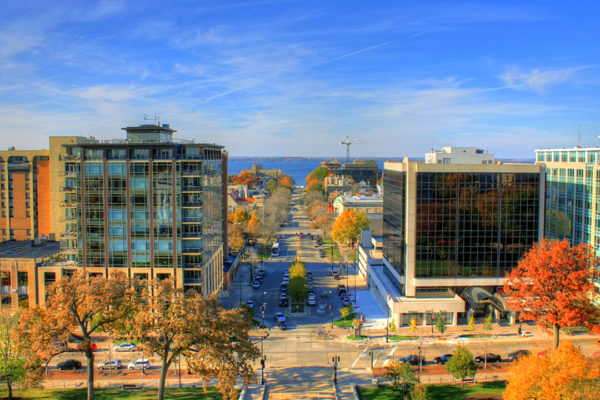
Madison sits on an isthmus between Lakes Mendota and Monona, picked as Wisconsin’s capital in 1836 after land speculator James Duane Doty plied legislators with buffalo robes and cheap lots in his “paper city”, which he named after James Madison, who had just died.
Madison’s sights include the State Capitol, built from 1906 to 1917 with a granite dome topped by Daniel Chester French’s statue Wisconsin, the Dane County Farmers’ Market around Capitol Square, the largest producer-only farmers’ market in the US, and Frank Lloyd Wright’s Monona Terrace, designed in 1938 but only opened in 1997.
Madison woke on 4 September 1979, the first day of classes, to find 1,008 plastic flamingos on the university’s Bascom Hill, a prank by student politicians, and in 2009 the city made the plastic flamingo its official bird.
5 – Peninsula State Park
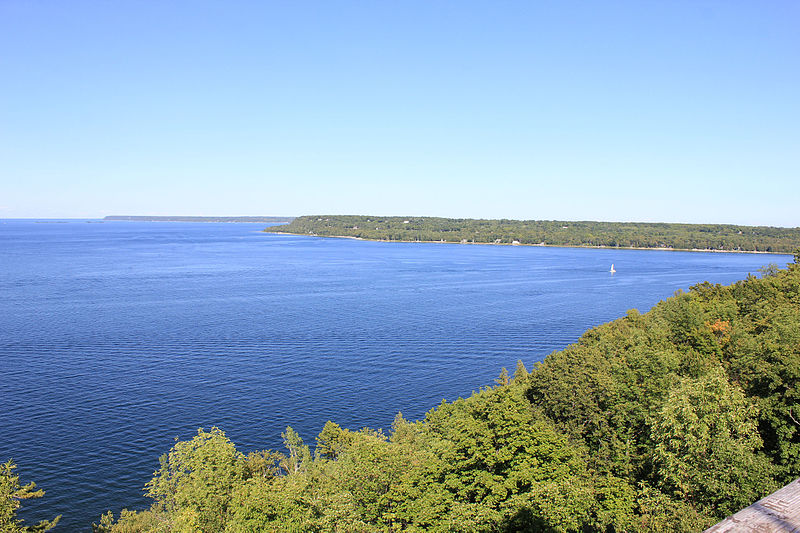
Peninsula State Park near Fish Creek in Door County, with about 8 miles of Green Bay shoreline, was created in 1910 and is Wisconsin’s second-oldest state park.
Peninsula State Park’s sights include the Eagle Bluff Lighthouse of 1868, which guides boats through Strawberry Channel, Eagle Tower, rebuilt with an accessible canopy-walk ramp, the outdoor musicals of Northern Sky Theater, a golf course and Nicolet Beach.
Potawatomi chief Simon Kahquados was reburied in Peninsula State Park on Memorial Day 1931 before about 15,000 people, and Door County takes its name from Porte des Morts, French for “door of the dead”, the strait off the peninsula’s tip, though the canoe disaster said to explain it is unconfirmed.
6 – Taliesin
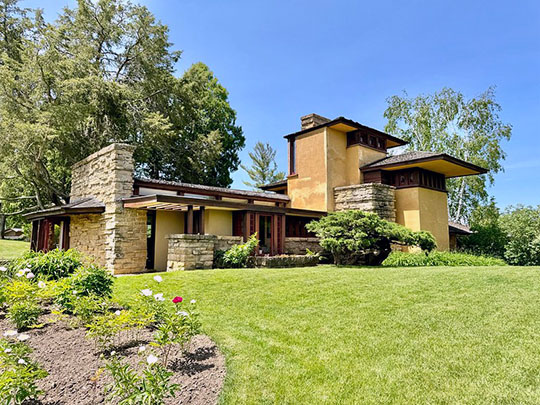
Taliesin near Spring Green was Frank Lloyd Wright’s home and studio, begun in 1911 in the valley where his Welsh Lloyd Jones relatives had settled in the mid-1800s, and its name, after the Welsh bard Taliesin, means “shining brow”, as the house wraps around the brow of the hill rather than sitting on top of it.
Taliesin’s estate takes in the twice-rebuilt house, Wright’s 1896 Romeo and Juliet Windmill and the Hillside Home School he designed for his aunts, where the Taliesin Fellowship began training apprentices in 1932, and since 2019 it’s been part of a UNESCO World Heritage Site of eight Wright buildings.
On 15 August 1914 a servant, Julian Carlton, set Taliesin on fire and killed seven people with a hatchet, including Wright’s partner Mamah Borthwick and her two children, and Wright’s grave by Unity Chapel is empty, as his body was dug up in 1985 and his ashes taken to Arizona at his widow’s request.
7 – Harley-Davidson Museum
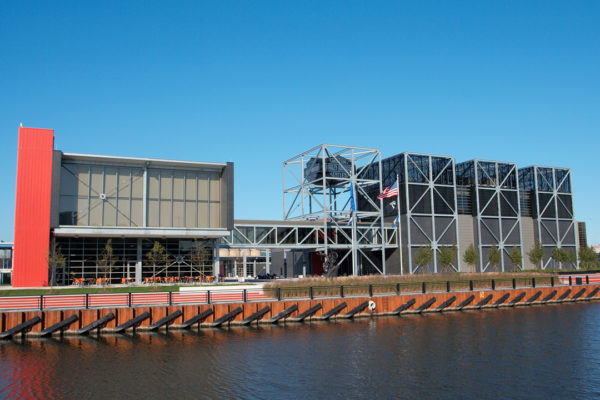
The Harley-Davidson Museum opened in July 2008 in Milwaukee’s Menomonee Valley, telling the story of the company William S. Harley and Arthur Davidson started in 1903, when they built their first motorcycle in a 10-by-15-ft backyard shed.
The Harley-Davidson Museum’s sights include Serial Number One, the oldest known Harley, displayed above an outline of the original shed, Elvis Presley’s 1956 Model KH, and “King Kong”, a 13-ft custom bike with two engines.
Harleys are called “hogs” after the piglet mascot the factory racing team carried on victory laps around 1920, the company spent six years trying to trademark its engine’s sound before giving up in 2000, and the Davidson family’s roots were in Aberlemno, in Angus, Scotland.
8 – Lambeau Field

Lambeau Field in Green Bay opened as City Stadium in 1957 and was renamed in 1965 after Curly Lambeau, who co-founded the Packers in 1919 with George Calhoun and named them after the Indian Packing Company, which put up $500 for their jerseys.
Lambeau Field is the oldest stadium with an NFL team in continuous residence, home of the Lambeau Leap into the stands, first made by LeRoy Butler in 1993, and of the 1967 “Ice Bowl”, when the Packers beat Dallas 21–17 at about −13°F on a field frozen solid after the heating failed.
The Packers have been a community-owned non-profit since 1923, with shares that pay no dividends, Lambeau himself had played for Notre Dame’s Fighting Irish under Knute Rockne in 1918, and in 2023 Daniel Whelan from Enniskerry, Co. Wicklow, became the first Irish-born NFL player since 1985 when he made the Packers as a punter.
9 – Apostle Islands
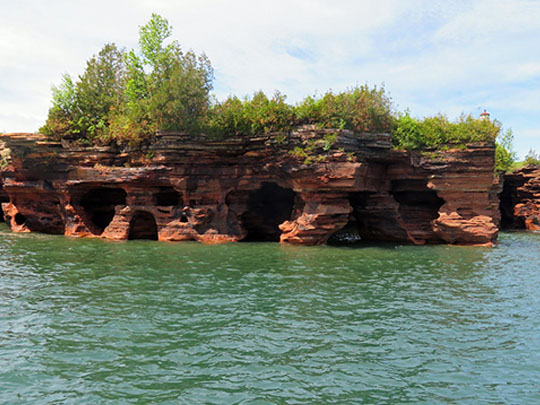
The Apostle Islands, 21 of them, lie in Lake Superior off the Bayfield Peninsula in the Ojibwe homeland, and Apostle Islands National Lakeshore was created in 1970, sponsored by Senator Gaylord Nelson, the founder of Earth Day.
The Apostle Islands’ sights include red sandstone sea caves on Devils Island and along the mainland shore near Meyers Beach, which in rare frozen winters you can walk to across the ice, and what the Park Service calls the largest collection of lighthouses in the National Park system.
The Apostle Islands were probably named by French Jesuits after the Twelve Apostles, though there are more than 20, their quarries supplied brownstone for buildings such as the Milwaukee County Courthouse, and Antrim fur trader John Johnston wintered at La Pointe on Madeline Island in 1791–92 and married the daughter of Ojibwe chief Waubojeeg, and their daughter Jane Johnston Schoolcraft is recognised as the first Native American literary writer.
10 – Holy Hill, Erin
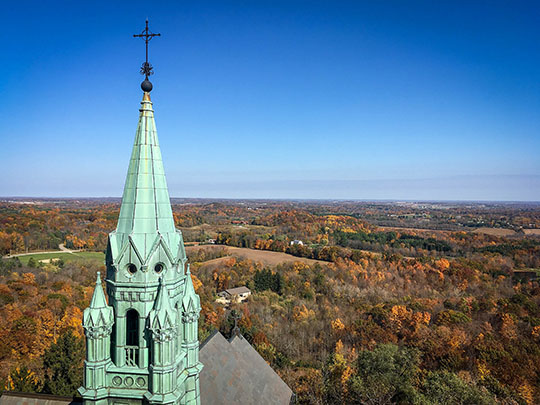

Holy Hill rises about 1,350 ft in the Kettle Moraine in the Town of Erin, Washington County, a hilltop named “Holy Hill” by Irish settlers, in a town created in 1846 and named after Erin, the poetic name for Ireland.
Holy Hill’s Basilica of Mary, Help of Christians, a Romanesque Revival church built from 1926 to 1931 and run by Discalced Carmelite friars since 1906, was made a minor basilica in 2006, and 178 steps climb its Scenic Tower for views over the Kettle Moraine.
Holy Hill’s first log chapel was dedicated in 1863, around the time a French hermit, François Soubrio, is said to have arrived with a 1676 diary describing a cross on a cone-shaped hill and been cured of paralysis after a night of prayer there, and the tradition that Jacques Marquette climbed the hill in 1673 is cherished but unproven.